


The sys admin's daily grind: Miredo

Exploring the Tunnel

© fckngc, 123RF
The move from IPv4 to IPv6 must be gradual rather than abrupt. After just two minutes of configuration work, Charly leans back and watches his first IPv6 packets pass through a Miredo tunnel.
Network component manufacturers are still spreading the dread tidings: IP addresses are becoming scarce. Stories spread of large access providers buying out smaller ones to get their hands on their IPv4 address pools. If you prefer not to be a victim of the digital famine, you need to switch quickly, says the industry that offers IPv6-capable switches and gateways.
But really, not many access providers can give you native IPv6. In fact, in the context of discussions on IPv6, the word "move" doesn't seem to be all that appropriate. "Co-location" sounds more like it but does tend to remind one of grammar lessons at school. "Dual-tracking" is maybe the best option, because a peaceful coexistence of IPv4 and IPv6 is likely to become the rule, rather than the exception, in the near future.
If you are a customer with an IPv4 provider and would like to add IPv6 to your home network, many tunneling solutions are around that you can try. Configuring them will typically require admin-level skills and is probably beyond the ability of less experienced users, who simply want to explore the field. Teredo solves this problem. The technology, which was developed by Microsoft, sets up an IPv6 tunnel behind a NAT router and automatically distributes the required addresses. Teredo encapsulates the IPv6 payload in v4 UDP datagrams. The Teredo RFC 4380 points out that this is simply an interim solution – other people have been known to refer to it as a "dirty hack."
This Is Not What Problems Look Like
Whatever your opinion, however, Teredo isn't a bad choice for some cautious, initial steps toward IPv6. Setting up Teredo requires virtually no configuration work, and clients are available for any recent operating system. For example, the Linux Miredo [1] client is included with practically any popular distribution. On my Ubuntu lab machine, all I needed to do was type:
apt-get install miredo
to both install the client and start the service. In less than a minute, I had a working IPv6 connection with a prefix of 2001::/32, as defined by the RFC (Figure 1), even though my client resides behind no fewer than two NAT gateways.
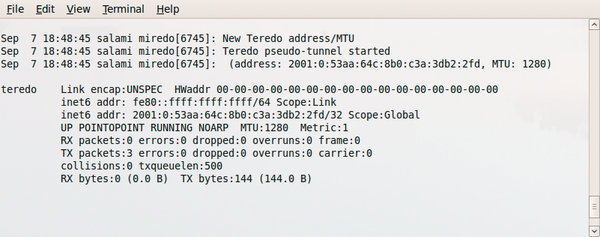 Figure 1: The tunnel gives you a sneak preview of the IPv6 future. This example uses the prefix 2001::/32.
Miredo doesn't need a modified kernel; instead, it runs completely in userspace. Although you need to launch Miredo as root to define the required interface parameters, it de-escalates its privileges to nobody after launch. The -u username option lets you specify a user other than nobody. Some distros create a miredo account during the installation.
Finally, a word about security: Whereas NAT routers, which just about every DSL user in the IPv4 world has, put up some kind of protection against undesirable access, IPv6 tears down these barriers. If you are worried about delving into ip6tables, you should at least bind all services suitable for this purpose to localhost (::1).
Infos
- Miredo: http://www.remlab.net/miredo/
The Author

Charly Kühnast is a Unix operating system administrator at the Data Center in Moers, Germany. His tasks include firewall and DMZ security and availability. He divides his leisure time into hot, wet, and eastern sectors, where he enjoys cooking, fresh water aquariums, and learning Japanese, respectively.
Buy this article as PDF
(incl. VAT)
Buy Linux Magazine


US / Canada
UK / Australia
Subscribe to our Linux Newsletters
Find Linux and Open Source Jobs
Subscribe to our ADMIN Newsletters
Support Our Work
Linux Magazine content is made possible with support from readers like you. Please consider contributing when you’ve found an article to be beneficial.

News
-
TUXEDO Computers Unveils Linux Laptop Featuring AMD Ryzen CPU
This latest release is the first laptop to include the new CPU from Ryzen and Linux preinstalled.
-
XZ Gets the All-Clear
The back door xz vulnerability has been officially reverted for Fedora 40 and versions 38 and 39 were never affected.
-
Canonical Collaborates with Qualcomm on New Venture
This new joint effort is geared toward bringing Ubuntu and Ubuntu Core to Qualcomm-powered devices.
-
Kodi 21.0 Open-Source Entertainment Hub Released
After a year of development, the award-winning Kodi cross-platform, media center software is now available with many new additions and improvements.
-
Linux Usage Increases in Two Key Areas
If market share is your thing, you'll be happy to know that Linux is on the rise in two areas that, if they keep climbing, could have serious meaning for Linux's future.
-
Vulnerability Discovered in xz Libraries
An urgent alert for Fedora 40 has been posted and users should pay attention.
-
Canonical Bumps LTS Support to 12 years
If you're worried that your Ubuntu LTS release won't be supported long enough to last, Canonical has a surprise for you in the form of 12 years of security coverage.
-
Fedora 40 Beta Released Soon
With the official release of Fedora 40 coming in April, it's almost time to download the beta and see what's new.
-
New Pentesting Distribution to Compete with Kali Linux
SnoopGod is now available for your testing needs
-
Juno Computers Launches Another Linux Laptop
If you're looking for a powerhouse laptop that runs Ubuntu, the Juno Computers Neptune 17 v6 should be on your radar.