


Fresh Wind at Work: OpenOffice 3.1

Cute but astute: the new minor version of OpenOffice can do more than ever, such as cast shadows, position chart axes and provide structured conversations through comments.
After December's feature freeze and the release candidate exactly a month ago, OpenOffice 3.1 now enters onstage in time with its roadmap. One new feature is anti-aliasing to improve clarity of graphics. Another is leaving shadows of objects behind instead of dotted outlines when moving graphics. An improved file locking mechanism prevents overwrites and reports who most recently had the file open. To encourage collaboration, replies to comments now lead to dialogue when editing text.
Also new in OpenOffice Writer is that it targets document writers with more involved ordering formats and automatic indexing. They can now apply an "outline level" to a normal paragraph to designate it as a heading for indexing without modifying the style or paragraph structure.
 Help for formulas with OpenOffice
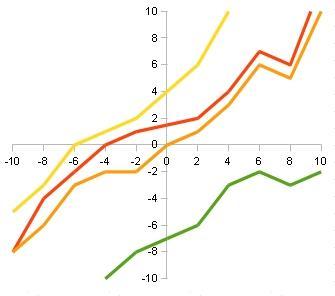
As far as OpenOffice Calc, it now has help for writing formulas with hot hints showing the formula syntax next to the cell. Charting also went through some changes based on user feedback to OpenOffice's QA public request mechanism. One change based on demand from educational users is a flexible positioning of chart axes and axis labels, functionality that already exists in MS Excel and Gnome's Gnumeric, thus categorizing the request not only under "usability" but also "interoperability." From several respondents: "This is important for the possibility to use OOoCalc in building official exam documents in France... All secondary schools in North of France... have now at least one classroom, with one computer for each pupil. We have installed OpenOffice everywhere... So this requirement [of having axis labels on the edges of the diagram area] is really important for us, and will favorably influence the choice of OpenOffice Calc in most French schools." Thus the enhancement.
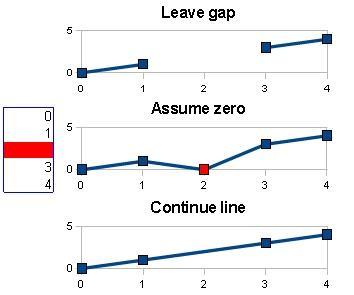 Missing figures in a graph can be shown in three different ways.
For OpenOffice Base users who work with macros, some new changes occurred. As of version 3.1, OpenOffice stores database applications with macros and scripts directly as an .odb file and not in subcomponents such as forms and reports. All macros were moved into the main part of the database. A warning on the Base wiki page is clear about incompatibility issues when opening previous documents with macros or scripts unless migrating the documents, which you can accomplish using a "Migrate Macros" wizard.
OpenOffice 3.1 downloads are available from the project website.
Subscribe to our Linux Newsletters
Find Linux and Open Source Jobs
Subscribe to our ADMIN Newsletters
Support Our Work
Linux Magazine content is made possible with support from readers like you. Please consider contributing when you’ve found an article to be beneficial.

News
-
TUXEDO Computers Unveils Linux Laptop Featuring AMD Ryzen CPU
This latest release is the first laptop to include the new CPU from Ryzen and Linux preinstalled.
-
XZ Gets the All-Clear
The back door xz vulnerability has been officially reverted for Fedora 40 and versions 38 and 39 were never affected.
-
Canonical Collaborates with Qualcomm on New Venture
This new joint effort is geared toward bringing Ubuntu and Ubuntu Core to Qualcomm-powered devices.
-
Kodi 21.0 Open-Source Entertainment Hub Released
After a year of development, the award-winning Kodi cross-platform, media center software is now available with many new additions and improvements.
-
Linux Usage Increases in Two Key Areas
If market share is your thing, you'll be happy to know that Linux is on the rise in two areas that, if they keep climbing, could have serious meaning for Linux's future.
-
Vulnerability Discovered in xz Libraries
An urgent alert for Fedora 40 has been posted and users should pay attention.
-
Canonical Bumps LTS Support to 12 years
If you're worried that your Ubuntu LTS release won't be supported long enough to last, Canonical has a surprise for you in the form of 12 years of security coverage.
-
Fedora 40 Beta Released Soon
With the official release of Fedora 40 coming in April, it's almost time to download the beta and see what's new.
-
New Pentesting Distribution to Compete with Kali Linux
SnoopGod is now available for your testing needs
-
Juno Computers Launches Another Linux Laptop
If you're looking for a powerhouse laptop that runs Ubuntu, the Juno Computers Neptune 17 v6 should be on your radar.