


Shuttle Linux Minis to Come with VIA

Taiwan-based hardware manufacturer Shuttle has released a series of mini-desktops running Linux. The next generation will have power-efficient VIA Nano processors.
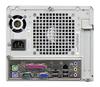
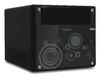
The Shuttle mini-desktops aren't exactly netbooks, rather compact desktops. At 28 x 19 x 17 cm they wouldn't fit into most handbags, but they take up much less space on the desk. The series called KPC (for Korporate Perfect Cube) includes the mini-desktops with Intel chipsets in various configurations, even a selectable housing design. An upcoming power-saving model will include a VIA Nano processor. The Shuttle K56, as it's called (known as the K560V in Europe), has two monitor connections and passive CPU cooling. The VIA variant should be ready for delivery about early April 2009; prices haven't yet been determined.
Shuttle's earlier K45 (K450V in Europe) cube as been out for some time, equipped with Intel Celeron. The company presented the absence of a front-panel optical drive and USB port on the cube as a distinct security feature to prevent data theft and malware. Its space-saving design accounts for an optimum selection of build elements that do not require complex cooling. The K450V model has a 92 mm fan at the rear with an Intel-boxed cooler. The complete SLK4500 is priced at about $300, the barebones K4500 at $200.
Shuttle has also released a power-saving XPC X2700 with Foresight Linux (or in Europe as the X270VA with openSUSE) with an Intel Atom processor, 1-GByte DDR2 memory, 160-GByte hard disk (in the X270VA version) and a DVD burner, starting at about $400.
The hardware vendor started to show off its Linux mini-desktops in September 2007. The difference between the U.S. and European Linux models is that the U.S. models have Foresight Linux and the European models have openSUSE from Novell.
| Gallery (5 images) |
|---|

|
Comments
comments powered by DisqusSubscribe to our Linux Newsletters
Find Linux and Open Source Jobs
Subscribe to our ADMIN Newsletters
Support Our Work
Linux Magazine content is made possible with support from readers like you. Please consider contributing when you’ve found an article to be beneficial.

News
-
Linux Servers Targeted by Akira Ransomware
A group of bad actors who have already extorted $42 million have their sights set on the Linux platform.
-
TUXEDO Computers Unveils Linux Laptop Featuring AMD Ryzen CPU
This latest release is the first laptop to include the new CPU from Ryzen and Linux preinstalled.
-
XZ Gets the All-Clear
The back door xz vulnerability has been officially reverted for Fedora 40 and versions 38 and 39 were never affected.
-
Canonical Collaborates with Qualcomm on New Venture
This new joint effort is geared toward bringing Ubuntu and Ubuntu Core to Qualcomm-powered devices.
-
Kodi 21.0 Open-Source Entertainment Hub Released
After a year of development, the award-winning Kodi cross-platform, media center software is now available with many new additions and improvements.
-
Linux Usage Increases in Two Key Areas
If market share is your thing, you'll be happy to know that Linux is on the rise in two areas that, if they keep climbing, could have serious meaning for Linux's future.
-
Vulnerability Discovered in xz Libraries
An urgent alert for Fedora 40 has been posted and users should pay attention.
-
Canonical Bumps LTS Support to 12 years
If you're worried that your Ubuntu LTS release won't be supported long enough to last, Canonical has a surprise for you in the form of 12 years of security coverage.
-
Fedora 40 Beta Released Soon
With the official release of Fedora 40 coming in April, it's almost time to download the beta and see what's new.
-
New Pentesting Distribution to Compete with Kali Linux
SnoopGod is now available for your testing needs
shuttle