


Deploying Debian systems with FAI
The Fully Automatic Installation (FAI) framework developed at the University of Cologne, Germany, relieves the headache of mass installing Debian systems. FAI offers several customization features and allows you to set up virtual systems. The new 3.2.9 [1] version supports Debian Lenny and includes a new partioning tool.
How It Works
FAI manages the installation process by automating the steps executed by the Debian installer. As shown in Figure 1, an FAI server system runs the FAI daemon and also hosts the services necessary to support network-based installation, including NFS, TFTP, and DHCP. In the most basic scenario, a client with a preboot execution environment (PXE)-based network adapter remote boots, gets an IP address from the DHCP server, then obtains the necessary files through TFTP to launch the remote installation.
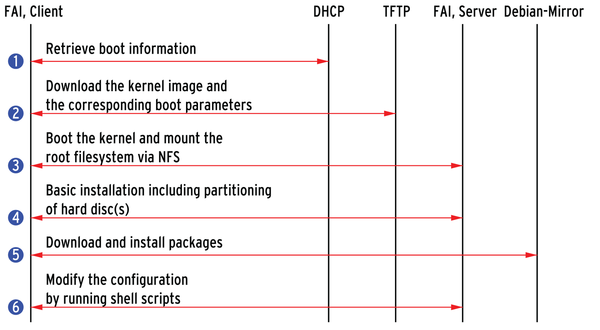 Figure 1: FAI goes through several phases to install a Debian system.
[...]
Buy this article as PDF
(incl. VAT)
Buy Linux Magazine
Subscribe to our Linux Newsletters
Find Linux and Open Source Jobs
Subscribe to our ADMIN Newsletters
Support Our Work
Linux Magazine content is made possible with support from readers like you. Please consider contributing when you’ve found an article to be beneficial.

News
-
United Nations Open Source Portal Goes Live
A new open source portal seeks to coordinate and scale open source efforts across the United Nations system.
-
KDE Linux Drops AUR
KDE Linux developers have dropped the Arch User Repository from the build pipeline due to security concerns; other distributions should consider doing the same.
-
California May Exempt Linux from Its Age-Verification Law
After backlash from the Linux community, California may be backing off on its promise to force all operating systems to verify age, but one platform may still have to comply.
-
Another Logic Bug Found in Linux Kernel
Qualys has discovered a vulnerability in the Linux kernel that can be used to elevate standard user privileges.
-
Ubuntu Core 26 Offers Game-Changing Enterprise Features
Ubuntu Core 26 could be a game-changer for organizations looking for increased security and reliability.
-
AI Flooding the Linux Kernel Security Mailing List
AI is giving Linus Torvalds a headache, but not in the way you might think.
-
Top Priorities for Open Source Pros Seeking a New Job
Professional fulfillment tops the list, according to LPI report.
-
Container-Based Fedora Hummingbird Designed for Agent-First Builders
Fedora Hummingbird brings the same approach to the host OS as it does to containers to level up security.
-
Linux kernel Developers Considering a Kill Switch
With the rise of Linux vulnerabilities, the kernel developers are now considering adding a component that could help temporarily mitigate against them… in the form of a kill switch.
-
Fedora 44 Now Gaming Ready
The latest version of Fedora has been released with gaming support.