


Security with the Trusted Platform Module

Trusted Computing
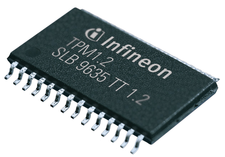
The Trusted Platform Module on your computer's motherboard could lead to better security for your Linux system.
The security of any operating system (OS) layer depends on the security of every layer below it. If the CPU can't be trusted to execute code correctly, there's no way to run secure software on that CPU. If the bootloader has been tampered with, you cannot trust the kernel that the bootloader boots. Secure Boot allows the firmware to validate a bootloader before executing it, but if the firmware itself has been backdoored, you have no way to verify that Secure Boot functioned correctly.
This problem seems insurmountable: You can only trust the OS to verify that the firmware is untampered with if the firmware itself has not been tampered with. How can you verify the state of a system without having to trust it first?
The answer lies in a set of technologies collectively referred to as Trusted Computing. A consortium of companies called the Trusted Computing Group [1] maintains the specifications related to Trusted Computing. At the heart of the Trusted Computing environment is a small hardware component called a Trusted Platform Module (TPM). The TPM is a chip connected by bus to the system motherboard, and sometimes it can be retrofitted as a module (Figure 1). TPMs are not fast or powerful – almost anything that can be done on a TPM can be done much faster on the CPU. Neither can the TPM see what's happening on the rest of the system; TPMs know only what the rest of the computer chooses to tell them.
[...]
Buy this article as PDF
(incl. VAT)
Buy Linux Magazine
Subscribe to our Linux Newsletters
Find Linux and Open Source Jobs
Subscribe to our ADMIN Newsletters
Digital Autonomy
• How the Fediverse Found Parts for Its Platforms
• The Answer Was Already on the Shelf
• Changing the Chip Industry: How Public Investment Has Grown Open Silicon
• United Nations Open Source Portal Goes Live
• EU Open Source Strategy Plays Key Role in Tech Sovereignty Package
• France Says “Au Revoir” to Microsoft
Support Our Work
Linux Magazine content is made possible with support from readers like you. Please consider contributing when you’ve found an article to be beneficial.

News
-
PwnEscape Poses VM Vulnerability
A guest-to-host escape flaw in Linux KVM, named PwnEscape, might be yet another means of attacking Linux.
-
Linux Mint 27 Set for a Christmas Release
The developers behind Linux Mint have announced a Christmas release, and it looks like Santa's sack will be brimming with features.
-
Is Linus Torvalds Vibe Coding?
The creator of Linux has added AI into his process for Linux kernel development, and it's more than just for debugging.
-
openKylin 3.0 Released with Expanded AI Integration
The latest release features a pre-installed AI agent to help perform tasks.
-
DigitalOcean Ends Open Source Credits Program
In a change that has surprised many open source developers, DigitalOcean has decided to sunset its Open Source Credits Program.
-
Office 365 Available for Testing on Linux via Bottles
Linux users can now test the official Office 365, thanks to Mirko Brombin's work on Bottles.
-
Dutch Government Turns to Open Source for Digital Sovereignty
Following in the footsteps of other European countries, the Netherlands is looking to increase its sovereign digital infrastructure with open source software.
-
Linux May Soon Work on Snapdragon X2-Based PCs
If you're thinking about buying a Snapdragon X2-based desktop or laptop, Linux may soon be an option.
-
KDE for People Initiative Calls for AI Ban in Plasma
A new community of KDE wants the project to adopt a strict no-AI policy for KDE Plasma.
-
KDE Sets Ambitious Goals for 2026 and Beyond
KDE Connect reveals the goals for the Linux desktop darling, with one of those goals long overdue.