


IBM System S: Stream Computing

IBM's new System S analyzes business data at their creation.
System S processes different data simultaneously, hence the name "Stream Computing." The new software should benefit, for example, financial institutions, government agencies and the transportation and retail industries, because it analyzes and processes data at creation time. The IBM labs have been working on the approach for seven years and announced its availability at their recent annual investor briefing in New York. For its further development, the company opened the IBM European Stream Computing Center in Dublin, Ireland as the hub of research, customer support and advanced testing.
IBM promises users the current System S as a definitive first state. The new perpetual analytics model is unlike the traditional one where data is first stored in memory before being analyzed. As the press release states, "Traditional computing models retrospectively analyze stored data and cannot continuously process massive amounts of incoming data streams that affect critical decision-making." A common application example for the new model is a webserver that needs to process real-time location data for mapping purposes.
There are a few avenues for this perpetual analytics approach. One is the Stream Processing Application Declarative Engine (SPADE), a programming language with its own runtime environment for applications that support Stream Computing. No specific knowledge of the underlying technology is necessary. Another avenue is the Semantic Solver in the IBM InfoSphere solution that directly interprets data. The third avenue allows more advanced users to develop an Eclipse-based IDE application that creates data streams, and types for other components to reuse or create streams.
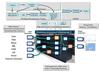
Unfortunately IBM seems to be loathe to expose too much about the new technology. A data sheet on the subject is available only after an extensive registration (see Gallery). On an inquiry into the matter by our publication, a spokesperson at IBM Labs informed us that System S is part of the Infosphere product line that can currently run on RHEL 32-bit and 64-bit machines with Intel chips. She also revealed that the software was developed on Linux. Some open source software came into play, such as the C++ libraries of the Boost project, Graphviz graph visualization software, and a few Perl modules (XmlSimple and XmlRegexp among them). Despite the naming similarities with IBM's X, I and Z systems, System S includes no hardware. SPADE, developer and analysis tools are nevertheless included. The InfoSphere family and its first offspring System S are a significant part of IBM's "Smarter Planet" initiative that it introduced at CeBIT 2009 in March.
| Gallery (8 images) |
|---|

|
Subscribe to our Linux Newsletters
Find Linux and Open Source Jobs
Subscribe to our ADMIN Newsletters
Support Our Work
Linux Magazine content is made possible with support from readers like you. Please consider contributing when you’ve found an article to be beneficial.

News
-
Red Hat Adds New Deployment Option for Enterprise Linux Platforms
Red Hat has re-imagined enterprise Linux for an AI future with Image Mode.
-
OSJH and LPI Release 2024 Open Source Pros Job Survey Results
See what open source professionals look for in a new role.
-
Proton 9.0-1 Released to Improve Gaming with Steam
The latest release of Proton 9 adds several improvements and fixes an issue that has been problematic for Linux users.
-
So Long Neofetch and Thanks for the Info
Today is a day that every Linux user who enjoys bragging about their system(s) will mourn, as Neofetch has come to an end.
-
Ubuntu 24.04 Comes with a “Flaw"
If you're thinking you might want to upgrade from your current Ubuntu release to the latest, there's something you might want to consider before doing so.
-
Canonical Releases Ubuntu 24.04
After a brief pause because of the XZ vulnerability, Ubuntu 24.04 is now available for install.
-
Linux Servers Targeted by Akira Ransomware
A group of bad actors who have already extorted $42 million have their sights set on the Linux platform.
-
TUXEDO Computers Unveils Linux Laptop Featuring AMD Ryzen CPU
This latest release is the first laptop to include the new CPU from Ryzen and Linux preinstalled.
-
XZ Gets the All-Clear
The back door xz vulnerability has been officially reverted for Fedora 40 and versions 38 and 39 were never affected.
-
Canonical Collaborates with Qualcomm on New Venture
This new joint effort is geared toward bringing Ubuntu and Ubuntu Core to Qualcomm-powered devices.