


IBM's New POWER7 Machines Work with 8 x 32 Threads

The new POWER7 processor has eight cores each running four threads. The biggest of the new POWER7 servers has almost 64 processor cores. An additional TurboCore mode can see to even better performance.
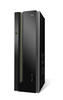
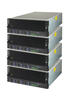
The largest of the new IBM machines presented February 8 in New York has the number 780 and up to eight POWER7 processors (see the Gallery). Among the new machines, the 780 racer goes beyond their performance as the only one running in so-called TurboCore mode, which using cache handling can draw even more out of the individual cores , mainly for databases and other transaction-oriented applications. Also with 64 cores is the somewhat smaller IBM Power 770. With the Power 755 and 750 Express, the former is intended as cluster for computationally intensive, high performance scenarios, its second slightly toned down smaller brother is right for a business server for the SME market. The 780 and 770 machines will hit the market in March and the 750 and 755 series earlier on February 19. No prices are mentioned yet.
The new POWER generation is set on parallel processing. Each POWER7 has 32 hands: it has eight cores, each running four threads. The new models' management software can also be turned on and off in various modes to optimize the workhorse for parallel processing, throughput or analysis. IBM also trimmed its software palette for parallel processing. The Websphere application server, DB2 database and Lotus Domino collaboration suite are notable examples. The POWER7 also includes IBM's Active Memory Expansion technology, which through memory compression can make applications believe that they've got 50% more available RAM. Possible applications are virtual environments and SAP programs.
Details on the POWER7 systems, which are compatible with Linux, IBM's AIX UNIX and System i, and their management software are on IBM's product page. IBM's media page also has a video that brings the new computer generation a bit closer.
| Gallery (5 images) |
|---|

|
Subscribe to our Linux Newsletters
Find Linux and Open Source Jobs
Subscribe to our ADMIN Newsletters
Digital Autonomy
• The Answer Was Already on the Shelf
• Changing the Chip Industry: How Public Investment Has Grown Open Silicon
• United Nations Open Source Portal Goes Live
• EU Open Source Strategy Plays Key Role in Tech Sovereignty Package
• France Says “Au Revoir” to Microsoft
Support Our Work
Linux Magazine content is made possible with support from readers like you. Please consider contributing when you’ve found an article to be beneficial.

News
-
Yet Another Linux Kernel Vulnerability Discovered
Affecting millions of systems, a kernel flaw discovered by Qualys could allow users to gain root privileges.
-
Ubuntu 26.10 to Include Ubuntu Certified Hardware Check
If you've ever wondered if your laptop or PC is officially certified to run Ubuntu, that curiosity will soon be met.
-
Substantial Update to IPFire Now Available
The lastest version of IPFire features a fundamental change to how the system handles DNS.
-
Gnome Working on Test Center App to Make Testing Easier
It's now possible to test experimental features on the Gnome desktop without worrying that you'll break things.
-
New Vulnerability Discovered in Linux Kernel
Hiding out for nearly 15 years, the Ghostlock vulnerability allows a standard logged-in user to gain root privileges.
-
New Linux Flaw Lets Attackers Escape VMs
A 16-year-old vulnerability allows an attacker to escape a virtual machine, gain access to the host, and execute malicious code.
-
Hannah Montana Linux Is Back!
Developer Noah Cagle decided the world needed the once obscure but beloved Linux distribution and gave it a decidedly pink refresh.
-
System76 Refreshes the Lemur Laptop
If you're looking for a laptop with tons of power and battery, look no further than the latest iteration of the System76 Lemur Pro.
-
More than 43 Million Lines of Code in Linux Kernel 7.2
Using the cloc utility, Michael Larabel of Phoronix discovered that Linux kernel 7.2 has over 43 million lines of code.
-
Kubuntu Focus Goes Ultra
The Kubuntu Focus team has upped the performance ante of its M2 and Zr laptops with the latest, greatest CPUs from Intel.