


Freescale Calls Up Second Generation Internet Tablets

Freescale drums at the Consumer Electronics Show (CES) in Las Vegas. Just as smart, but a bigger display than the Smartphone and costing less than $200 is what the next Internet Generation of 12 to 25-year-olds wants. At least the chipmaker has a fitting idea for it.
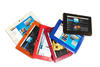
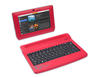
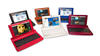
A 7" touchscreen, an i.MX515 applications processor and a battery that lasts all day long, that's what Freescale will announce as its reference tablet at the CES that runs from January 7-10, 2010. The smartbook tablet should run Android and other Linux flavors, and its price shouldn't exceed $200. Optional is a stand with keyboard, which qualifies the tablet as a minicomputer. It should show its differentiation from other tablets as they compare to netbooks -- considering that multimedia power and connectivity are nothing new withal.
Freescale claims that it will present with its smartbook tablet the first platform that originated with its own Smart Application Blueprint for Rapid Engineering (SABRE). Starting in February 2010 it should provide manufacturers a template for producing their own inhouse tablets with Freescale issuing block diagrams, schematics, parts lists and Linux board support package. The Texan company founded in 2004 calls the tablet a smartbook, an idea inherited from Qualcomm. The device looks like an ebook reader, weighs less than 9 pounds, and has 512 MBytes working memory, between 4 and 64 GBytes micro-SD card memory and a 3-Mpixel webcam. USB 2.0 and a mini-USB are available for loading files. An option for a SIM card is also foreseen and networking is wireless 802.11b/g/n, Bluetooth 2.1 and GPS. Operating systems include Ubuntu, Android and Millos mobile Linux from ThunderSoft, according to the two-page brochure.
Glen Burchers, who Freescale calls its foremost mobile expert, was convinced in his blog entry the end of December 2009 that the time was ripe for tablets (unlike the end of the 1990s when Apple put out its first tablet, Newton, that was less than successful). He describes tablets as powerful mobile devices with bigger displays than smartphones. Its target group is 12 to 25-year-old Internet users, as determined from unspecified recent research by Burchers's employer Freescale. The critical component of success over failure for the smartbook tablet he identifies as the Internet. Why his most convincing arguments shouldn't also apply to netbooks, or why "this time the tablet will finally succeed" may end up as history repeating itself, weren't questions he could easily answer.
| Gallery (5 images) |
|---|
|
Subscribe to our Linux Newsletters
Find Linux and Open Source Jobs
Subscribe to our ADMIN Newsletters
Support Our Work
Linux Magazine content is made possible with support from readers like you. Please consider contributing when you’ve found an article to be beneficial.

News
-
Container-Based Fedora Hummingbird Designed for Agent-First Builders
Fedora Hummingbird brings the same approach to the host OS as it does to containers to level up security.
-
Linux kernel Developers Considering a Kill Switch
With the rise of Linux vulnerabilities, the kernel developers are now considering adding a component that could help temporarily mitigate against them… in the form of a kill switch.
-
Fedora 44 Now Gaming Ready
The latest version of Fedora has been released with gaming support.
-
Manjaro 26.1 Preview Unveils New Features
The latest Manjaro 26.1 preview has been released with new desktop versions, a new kernel, and more.
-
Microsoft Issues Warning About Linux Vulnerability
The company behind Windows has released information about a flaw that affects millions of Linux systems.
-
Is AI Coming to Your Ubuntu Desktop?
According to the VP of Engineering at Canonical, AI could soon be added to the Ubuntu desktop distribution.
-
Framework Laptop 13 Pro Competes with the Best
Framework has released what might be considered the MacBook of Linux devices.
-
The Latest CachyOS Features Supercharged Kernel
The latest release of CachyOS brings with it an enhanced version of the latest Linux kernel.
-
Kernel 7.0 Is a Bit More Rusty
Linux kernel 7.0 has been released for general availability, with Rust finally getting its due.
-
France Says "Au Revoir" to Microsoft
In a move that should surprise no one, France announced plans to reduce its reliance on US technology, and Microsoft Windows is the first to get the boot.