


Wind River Brings Own Android to Market

Embedded specialist Wind River strives to win mobile network users with hardware compliance and its own Android branding.
Wind River is wooing mobile phone manufacturers with test runs and optimization that should make Wind River Android particularly reliable. The Android platform should run especially well on on the OMAP3 platform, but other boards should not present a problem for the mobile and embedded development vendor. Some of their collaborators already include Adobe (Flash), PacketVideo (multimedia player) and Red Bend (firmware over-the-air). New versions of Wind River Android should appear quarterly and concurrent with Android updates. The Intel undertaking will also naturally sell worldwide support for its mobile operating system. Prices have not been announced.
Wind River has already been busy with Android in the past. With the components of its newest Android offering, Wind River plans to optimize the Advanced Linux Sound Architecture (ALSA) for its hardware for Android and provide other hardware compatibilities as to multimedia and boot-time acceleration. OEMs and other providers can build in Wind River bootup and termination screens along with extended functions such as gesture options for calls and sending SMS messages. Another example is modified phone functions such as the short/long press behavior of hard and soft keys.
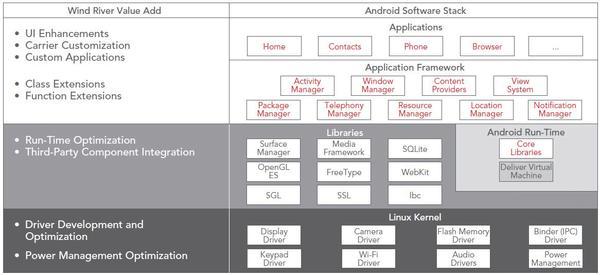 Above and beyond the standard Android functions, Wind River provides its own Android Platform third-party components and hardware compatibilities along with custom extensions and support.
With Texas Instruments, that is also a member of the Open Handset Alliance and the Limo Foundation, Wind River, which was recently acquired by Intel, entered a stragegic partnership in, among other things, Android and OMAP (Open Multimedia Application Platform). In November chip designer ARM instituted its own Android project. Meanwhile Qualcomm set up a new Innovation Center "focused on mobile open source platforms," with Android just among a few others.
The Linux-based mobile network system enhanced its multimedia capabilities in September with its new Android 1.6. It also provided multiple account and sychronization functions in its latest major update to 2.0 in October. Its newest release is Android 2.0.1.
Subscribe to our Linux Newsletters
Find Linux and Open Source Jobs
Subscribe to our ADMIN Newsletters
Support Our Work
Linux Magazine content is made possible with support from readers like you. Please consider contributing when you’ve found an article to be beneficial.

News
-
Is AI Coming to Your Ubuntu Desktop?
According to the VP of Engineering at Canonical, AI could soon be added to the Ubuntu desktop distribution.
-
Framework Laptop 13 Pro Competes with the Best
Framework has released what might be considered the MacBook of Linux devices.
-
The Latest CachyOS Features Supercharged Kernel
The latest release of CachyOS brings with it an enhanced version of the latest Linux kernel.
-
Kernel 7.0 Is a Bit More Rusty
Linux kernel 7.0 has been released for general availability, with Rust finally getting its due.
-
France Says "Au Revoir" to Microsoft
In a move that should surprise no one, France announced plans to reduce its reliance on US technology, and Microsoft Windows is the first to get the boot.
-
CIQ Releases Compatibility Catalog for Rocky Linux
The company behind Rocky Linux is making an open catalog available to developers, hobbyists, and other contributors, so they can verify and publish compatibility with the CIQ lineup.
-
KDE Gets Some Resuscitation
KDE is bringing back two themes that vanished a few years ago, putting a bit more air under its wings.
-
Ubuntu 26.04 Beta Arrives with Some Surprises
Ubuntu 26.04 is almost here, but the beta version has been released, and it might surprise some people.
-
Ubuntu MATE Dev Leaving After 12 years
Martin Wimpress, the maintainer of Ubuntu MATE, is now searching for his successor. Are you the next in line?
-
Kali Linux Waxes Nostalgic with BackTrack Mode
For those who've used Kali Linux since its inception, the changes with the new release are sure to put a smile on your face.