
Spotlight | Reviews | Current Issue | Academy | Newsletter | Subscribe | Shop |
Departments

Partner Links
Make your own website
WinWeb OnlineOffice
Comparing prices of hardware is worth it.
Price Comparison
UK Linux Jobs
What:
Where:
Country:
vacatures Netherlands njobs Linux vacatures
arbeit Deutschland njobs Linux arbeit
work United Kingdom njobs Linux jobs
Lavoro Italia njobs Linux lavoro
Emploi France njobs Linux emploi
trabajo Espana njobs Linux trabajo

user friendly

Admin Magazine

ADMIN Network & Security

Subscribe now and save!

ADMIN - Explore the new world of system administration! Special introductory offer! Order by September 30th to save 10% off the regular subscription price! Each issue delivers technical solutions to the real-world problems you face every day. Learn the latest techniques for better:

  • network security
  • system management
  • troubleshooting
  • performance tuning
  • virtualization
  • cloud computing


on Windows, Linux, Solaris, and popular varieties of Unix.

http://www.admin-magazine.com/

  linux-magazine.com » Issues » 2009 » 107 » Python 3  

Print this page. Recommend
Share

What's new in Python 3

The Next Snake
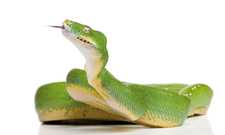
123rf_4727185_python_Eric-Isse.png

© Eric Isselée, 123RF

What do Python 2.x programmers need to know about Python 3?

With the latest major Python release, creator Guido van Rossum saw the opportunity to tidy up his famous scripting language. What is different about Python 3.0? In this article, I offer some highlights for Python programmers who are thinking about making the switch to 3.x.

The first important point is that version 3.0, which is also known as Python 3000 or Py3k, broke with an old tradition in that it is not downwardly compatible. According to von Rossum, "There is no requirement that Python 2.6 code will run unmodified on Python 3.0."

Python 2.6's main purpose is to take the pain out of switching versions. Many of Python 3.0's features were backported to Python 2.6. (A similar Python 2.7 version will accompany the recent Python 3.1 release.) In addition to these transitional 2.x versions, the 2to3 command-line tool supports programmers migrating code from Python 2.x to Python 3.x.

Quirks

Python has some quirks that have bugged van Rossum since the beginning of the millennium. With Python 3, he decided to sacrifice downward compatibility to remove these obstacles. The most blatant break with Python 2 is the syntactic change to print, which has mutated from a statement to a function; thus, parameters, now called keywords, are called in parentheses. This change is in line with Tim Peters' The Zen of Python: "Explicit is better than implicit." [1]. The new generic print syntax is print(*args, sep=' ', end='\n', file=sys.stdout), where args are the arguments, sep is the separator between the arguments, end is the end-of-line character, and file is the output medium.

Table 1 lists the syntax changes to the print function, including their default values. The advantage of the new version is not apparent until you take a closer look; the new print function now supports overloading. Listing 1 shows a print function that writes to standard output and to a logfile at the same time. To allow this to happen, the function instrumentalizes the built-in __builtins__.print function.

Listing 1

Overloading the Print Function

01 import sys
02 def print(*args,sep='',end="\n",file=sys.stdout):
03   __builtins__.print(*args)
04   __builtins__.print(*args,file=open("log.file","a"))

Doing no more than absolutely necessary is a virtue in many programming languages. Python 3 puts far more emphasis on lazy evaluation. Lists, dictionaries, or Python's functional building blocks no longer generate complete lists; they add just enough to support the evaluation of the output. Lazy evaluation thus saves memory and time.

The Python interpreter achieves this effect by returning only one iterable context that generates values on request. (This was what distinguished range and xrange in Python 2.) In Python 3, range acts like xrange, thus making the xrange function redundant.

The same applies to the functional building blocks map, filter, and zip. These functions have been replaced by their equivalents from the itertools library. For dictionaries, the resulting, iterable contexts are known as views. However, if the programmer needs the full expanded list, simple encapsulation of the iterable context by means of a list constructor, as shown in the following example, can help: list(range(11)) produces [0, 1, 2, 3, 4, 5, 6, 7, 8, 9, 10].

Division

That 1/2 == 0 shocks Python newcomers. This unusual feature is attributable to Python's C roots. Python 3 gets rid of this strange effect by differentiating between true division and floor division. Whereas in true division 1/2 == 0.5, floor division works like division in Python 2. The notation for floor division uses two slashes: 1//2 == 0.

In Python 2, programmers had to declare strings explicitly as Unicode strings. Python 3 strings are now implicitly Unicode. Python 3.0 only distinguishes between text and data. Text (str) relates to strings and is the same as Python 2 Unicode strings. Data (bytes) are 8-bit strings and the same as Python 2 strings. Python 3 developers need to declare data: b"8_bit_string". Table 2 gives an overview of the difference between Python 2 and 3.

The str.encode() and bytes.decode() functions are available to convert between data types. Programmers need this conversion in Python 3.0 when working with both data types; implicit type conversion no longer takes place. Programmers simply have to decide.

Syntactic Changes

Function annotations in Python 3 now allow programmers to bind metadata to a function. Decorators can then be added to the function in a second step; decorators automatically generate data from the metadata or perform type checking at run time.

The equivalent functions, sumOrig and sumMeta (Figure 1), show function declarations with and without metadata. The second function includes metadata for the signature and return value. This metadata can be referenced with the __annotations__ function attribute.


Figure 1: Function annotations bind metadata to a function.


Read full article as PDF »


Comments

It is not named as snake, but you missed the point

ocumo Dec 12, 2009 10:08pm GMT

The title of the article does not have anything to do with what inspired or not the creator of this language. The above comment just demonstrates the most ridiculous and basic lacking of any creativity or humor and denotes a very primitive and intolerant mind, which does not seem to even have noticed that the logo of Python is that of a SNAKE and not exactly a picture of Monty Python.

The article is very good.

Sadly, for some people it is easier to destroy and insult than to be creative and positive about anything.

Ancestor python

Twelve toes Aug 19, 2009 2:01pm GMT

Yeah so what if it was not named after a snake. Monty Python's ancestors derived their surname from the python snake itself which was commonly found in their area where they originated from; so it's still from the snake. Heh heh!

Python is not named after a snake

Python programmer Aug 19, 2009 8:48am GMT

It's hard to imagine how the author could get this so fundamentally wrong. Hear this: Python is not named after the snake; it's named after Monty Python, as any cursory survey of its history will reveal.

Print this page. Recommend
Share
Related Articles
TURNING BACK TIME Easy Backups with Flyback
Django Web Framework Django and the Django Software Foundation
KNOPPIX 6.1 DVD INLAY
Perl: USB Subsystem Perl script controls toy USB canon
GOOD MORNING CAMPERS! The sys admin’s daily grind: LUG Camp 2010 and Python
Issue 120: TOC Table of Contents
Special Linux Magazine 3 for 1 Offer

Get 3 Issues + 3 DVDs for the price of a single issue!

Let Linux Magazine's hands-on, technical articles guide you in your daily Linux use. Check out bonus DVDs like Ubuntu, SUSE, or Fedora and save the download.

Only available for a limited time. Don't miss out!

more...
