


On the DVD

On the DVD
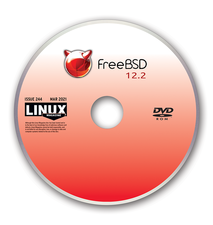
FreeBSD 12.2 and GhostBSD
So you think you know open source? Just the fact that you are reading this page means that what you probably know is Linux. This month, the DVD provides a glimpse into another corner of open source – the world of BSD. Like Linux, BSD varieties are free operating systems that are Unix descendants. However, they are released under the permissive BSD licenses rather than the copyleft licenses that dominate Linux. You will also find many other differences, despite the similar underlying structures.
FreeBSD 12.2 (64-bit)
First released in 1992, FreeBSD is the most popular version of BSD, especially for servers. Those coming from Linux will find many details different, such as the device naming system, as well as many commands and applications. More importantly, FreeBSD has never passed through a popularity phase like the one that drove Linux to develop mature desktop environments – although some mature BSD environments are available today. Instead, FreeBSD more resembles Linux in its hobbyist days. For instance, FreeBSD's install is a text-based series of questions with no hardware auto-detection. Furthermore, no desktop environment is installed, although users can add one later.
FreeBSD's assumption is that users have the knowledge or interest to work with FreeBSD until their systems are configured to their liking. Installation is unlikely to produce a working desktop system in 15 minutes. Instead, users should be ready to refer repeatedly to the FreeBSD documentation (https://www.freebsd.org/docs.html) and to fetch desired applications from websites. The reward for this effort will be greater knowledge of Unix-like systems – as well as the satisfaction that comes with doing it yourself.
[...]
Buy this article as PDF
(incl. VAT)
Buy Linux Magazine
Subscribe to our Linux Newsletters
Find Linux and Open Source Jobs
Subscribe to our ADMIN Newsletters
Digital Autonomy
• How the Fediverse Found Parts for Its Platforms
• The Answer Was Already on the Shelf
• Changing the Chip Industry: How Public Investment Has Grown Open Silicon
• United Nations Open Source Portal Goes Live
• EU Open Source Strategy Plays Key Role in Tech Sovereignty Package
• France Says “Au Revoir” to Microsoft
Support Our Work
Linux Magazine content is made possible with support from readers like you. Please consider contributing when you’ve found an article to be beneficial.

News
-
Is Linus Torvalds Vibe Coding?
The creator of Linux has added AI into his process for Linux kernel development, and it's more than just for debugging.
-
openKylin 3.0 Released with Expanded AI Integration
The latest release features a pre-installed AI agent to help perform tasks.
-
DigitalOcean Ends Open Source Credits Program
In a change that has surprised many open source developers, DigitalOcean has decided to sunset its Open Source Credits Program.
-
Office 365 Available for Testing on Linux via Bottles
Linux users can now test the official Office 365, thanks to Mirko Brombin's work on Bottles.
-
Dutch Government Turns to Open Source for Digital Sovereignty
Following in the footsteps of other European countries, the Netherlands is looking to increase its sovereign digital infrastructure with open source software.
-
Linux May Soon Work on Snapdragon X2-Based PCs
If you're thinking about buying a Snapdragon X2-based desktop or laptop, Linux may soon be an option.
-
KDE for People Initiative Calls for AI Ban in Plasma
A new community of KDE wants the project to adopt a strict no-AI policy for KDE Plasma.
-
KDE Sets Ambitious Goals for 2026 and Beyond
KDE Connect reveals the goals for the Linux desktop darling, with one of those goals long overdue.
-
It’s Time to Test Fedora 45 Beta
Fedora 45 beta has been released with updated Gnome, KDE Plasma, and kernel.
-
Ubuntu Stonking Stingray Gets Even Rustier
Ubuntu 26.10 has completed its migration to the Rust-based coreutils.