


Jaguar Passes Roadrunner in Top500 (Gallery)

The Petaflop pioneer Roadrunner has been relegated to second place after the 225,000 processor cores of the Jaguar XT5. Europe's largest supercomputer, Bluegene/P, has meanwhile slipped in the ranks.
The current world champion of supercomputers, the Jaguar XT5, which since end of October underwent a processor upgrade from four-core to six-core CPUs, at 2.3 Petaflops/s, has trumped second place Roadrunner by nearly 100%. Petaflops/s refers to quadrillion calculations per second.
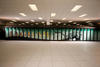
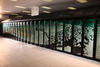
The Jaguar is a Cray XT5 system with 37,376 six-core Opterons, nearly 300 TeraBytes of RAM and 10,000 TeraBytes of hard drives. The researchers at the National Center for Computational Sciences (NCCS) use the Jaguar at the Oak Ridge National Laboratory (ORNL) for simulation and computations for environmental, chemical and material science, nuclear energy, astrophysics and particle physics (see Gallery). All the Jaguar computer nodes somewhere run SUSE Linux, whose kernel Cray reduced to essential services to avoid interrupting any scientific applications.
The National Institute for Computational Sciences (NICS) at the University of Tennessee, the NCCS partner, took third place with its Kraken supercomputer, with 832 Teraflops/s, 100,000 processor cores and 130 TeraBytes of RAM. The machine is again from Cray, and another XT5 model, to be specific. Bluegen/P from the Juelich research center in Germany this time had to be satisfied with fourth place: with 825 Teraflops/s it meant stepping down from third place it still had in June 2009.
Nearly 90% (446 machines) from the Top500 systems run on Linux, among them SUSE, Red Hat and CentOS. Second place went to UNIX at 5% (25 machines), third to Windows with 1% (5 machines). Although the research runs over the fastest supercomputers, together with the academic realm it amounts to only 35% of the worldwide giants with more than 20 Teraflops/s. Industrial investors are banking on High Computing in that it blocks off almost 63% of all supercomputers. About 55% are deployed in the U.S., with England a distant second at 10% and Germany at 5.4%. HP took over the lead from IBM as manufacturer, even though IBM is still assembling the most powerful computers worldwide.
| Gallery (8 images) |
|---|

|
Comments
comments powered by DisqusSubscribe to our Linux Newsletters
Find Linux and Open Source Jobs
Subscribe to our ADMIN Newsletters
Support Our Work
Linux Magazine content is made possible with support from readers like you. Please consider contributing when you’ve found an article to be beneficial.

News
-
Container-Based Fedora Hummingbird Designed for Agent-First Builders
Fedora Hummingbird brings the same approach to the host OS as it does to containers to level up security.
-
Linux kernel Developers Considering a Kill Switch
With the rise of Linux vulnerabilities, the kernel developers are now considering adding a component that could help temporarily mitigate against them… in the form of a kill switch.
-
Fedora 44 Now Gaming Ready
The latest version of Fedora has been released with gaming support.
-
Manjaro 26.1 Preview Unveils New Features
The latest Manjaro 26.1 preview has been released with new desktop versions, a new kernel, and more.
-
Microsoft Issues Warning About Linux Vulnerability
The company behind Windows has released information about a flaw that affects millions of Linux systems.
-
Is AI Coming to Your Ubuntu Desktop?
According to the VP of Engineering at Canonical, AI could soon be added to the Ubuntu desktop distribution.
-
Framework Laptop 13 Pro Competes with the Best
Framework has released what might be considered the MacBook of Linux devices.
-
The Latest CachyOS Features Supercharged Kernel
The latest release of CachyOS brings with it an enhanced version of the latest Linux kernel.
-
Kernel 7.0 Is a Bit More Rusty
Linux kernel 7.0 has been released for general availability, with Rust finally getting its due.
-
France Says "Au Revoir" to Microsoft
In a move that should surprise no one, France announced plans to reduce its reliance on US technology, and Microsoft Windows is the first to get the boot.
Flops = Floating-point operations per second
1.0 Petaflops means 1.0 x 10^15 floating-point operations PER SECOND.
Don'f forget Debian ;)