


Latitude 2100: Netbook Not Just for Students

Dell takes the new 10" 2100 netbook out of its Latitude business series to target students, but it also serves as a mobile business device. Ubuntu 8.10 runs on it.
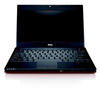
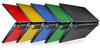
The base configuration for the new mini-netbook costs $369. For that you get a rubberized casing in one of five colors measuring 10" x 7.3" and tapering in thickness from less than an inch in front to one-and-a-half inches in the back. With the 3-cell battery (providing about three hours of service) the device weighs just under 3 pounds. Inside is an Atom N270 processor with 1.6 GHz, 512-KByte L2 cache and 533-MHz FSB. The base Linux configuration has the usual connectivity options (USB 2.0 x3, VGA, mic in and audio out), SATA drives up to 80 GBytes and hard drives at 5400 RPM, 1 GByte RAM, Gigabit Ethernet, WLAN 802.11b/g and a 3-in-2 card reader -- but no camera.
With all possible add-ons, bells and whistles, you can easily triple the price. Next to more L2 cache, you can get more disk space, a webcam, additional working memory, Bluetooth, a touchscreen, a 6-cell battery or Intel WLAN 802.11a/g/n. Additional support options satisfy various business needs. Clearly Dell is thereby targeting students on the one hand, but also positioning the 2100 as part of its Latitude series for small and middle sized businesses on the other. Especially appealing to students is the rubberized casing and WLAN indicator when in the classroom.
The Latitude 2100 is orderable from the Dell Online website. The Windows version costs somewhat more than the Ubuntu one. However, Dell also reduced the shipping costs to less than half.
| Gallery (7 images) |
|---|

|
Subscribe to our Linux Newsletters
Find Linux and Open Source Jobs
Subscribe to our ADMIN Newsletters
Digital Autonomy
• The Answer Was Already on the Shelf
• Changing the Chip Industry: How Public Investment Has Grown Open Silicon
• United Nations Open Source Portal Goes Live
• EU Open Source Strategy Plays Key Role in Tech Sovereignty Package
• France Says “Au Revoir” to Microsoft
Support Our Work
Linux Magazine content is made possible with support from readers like you. Please consider contributing when you’ve found an article to be beneficial.

News
-
Pine64 Halts Production of Linux Devices
With continued DRAM and eMMC shortages, Pine64 has decided to discontinue production of Linux devices.
-
The Bullet-Proof KDE Software Initiative Is Coming
KDE, Techpaladin, and Kubuntu Focus have announced a new initiative that will provide at least three years of support for KDE Plasma 6.6 LTS and related software.
-
Linux Mint Shares a Possible Kernel Cleanup Solution
For those on Linux Mint who like to keep multiple kernels around but don't want them to take up too much space, you might be getting a new automated tool.
-
CachyOS Gets an Update
CachyOS August 2026 release is now available with the latest version of KDE, some new features, and plenty of improvements.
-
The Linux Kernel Dev Staging Area Now Rejects AI-Generated Patches
Unless a kernel patch is a valid security fix, it will be rejected if it was created using AI.
-
Linux Surpasses Double-Digit Market Share
According to two sources, the Linux operating system has hit a major milestone in market share that naysayers thought would never happen.
-
AI Helped Develop a Linux Exploit
A use-after-free race exploit was discovered and exploited on CentOS Stream 9.
-
Yet Another Linux Kernel Vulnerability Discovered
Affecting millions of systems, a kernel flaw discovered by Qualys could allow users to gain root privileges.
-
Ubuntu 26.10 to Include Ubuntu Certified Hardware Check
If you've ever wondered if your laptop or PC is officially certified to run Ubuntu, that curiosity will soon be met.
-
Substantial Update to IPFire Now Available
The lastest version of IPFire features a fundamental change to how the system handles DNS.