


RFID reader on a Raspberry Pi

Counting Pumpkins
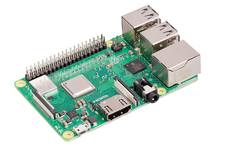
© Lead Image © raspberrypi.com
Inexpensive components for the SPI interface let you upgrade a Raspberry Pi 4 to a display system for zero-contact RFID-based data acquisition.
Radio-frequency identification (RFID) tags have become indispensable in industry and government, as well as the wholesale and retail spaces. The inexpensive transponder chips can be found on clothing labels, identification cards, and credit cards. Armed with just a Raspberry Pi and an RFID kit, you can read the data from these chips and view it on a display.
In this project, I read serial numbers from RFID tags stuck on 3D-printed pumpkins – a slightly different kind of detection task. To do this, I connect an RC522 [1] RFID kit and a 1.8-inch ST7735 serial peripheral interface (SPI) thin-film transistor (TFT) display [2] to a Raspberry Pi 4. Together, the two modules can cost less than $15 (EUR15, £14) in online stores. The pumpkins contain simple RFID tags [3], also available for very little cash. Although at first glance the project seems clear-cut and sounds as if it should work right away, check out the "Mishaps, Misfortunes, and Breakdowns" box to find out what can go wrong.
The circuit diagram in Figure 1 shows how the modules connect to the Raspberry Pi, along with two pushbuttons and LEDs for testing purposes. The KiCad layout of the project is included in the download section of this article [4].
[...]
Buy this article as PDF
(incl. VAT)
Buy Linux Magazine
Subscribe to our Linux Newsletters
Find Linux and Open Source Jobs
Subscribe to our ADMIN Newsletters
Digital Autonomy
• How the Fediverse Found Parts for Its Platforms
• The Answer Was Already on the Shelf
• Changing the Chip Industry: How Public Investment Has Grown Open Silicon
• United Nations Open Source Portal Goes Live
• EU Open Source Strategy Plays Key Role in Tech Sovereignty Package
• France Says “Au Revoir” to Microsoft
Support Our Work
Linux Magazine content is made possible with support from readers like you. Please consider contributing when you’ve found an article to be beneficial.

News
-
Office 365 Available for Testing on Linux via Bottles
Linux users can now test the official Office 365, thanks to Mirko Brombin's work on Bottles.
-
Dutch Government Turns to Open Source for Digital Sovereignty
Following in the footsteps of other European countries, the Netherlands is looking to increase its sovereign digital infrastructure with open source software.
-
Linux May Soon Work on Snapdragon X2-Based PCs
If you're thinking about buying a Snapdragon X2-based desktop or laptop, Linux may soon be an option.
-
KDE for People Initiative Calls for AI Ban in Plasma
A new community of KDE wants the project to adopt a strict no-AI policy for KDE Plasma.
-
KDE Sets Ambitious Goals for 2026 and Beyond
KDE Connect reveals the goals for the Linux desktop darling, with one of those goals long overdue.
-
It’s Time to Test Fedora 45 Beta
Fedora 45 beta has been released with updated Gnome, KDE Plasma, and kernel.
-
Ubuntu Stonking Stingray Gets Even Rustier
Ubuntu 26.10 has completed its migration to the Rust-based coreutils.
-
AI Fixes Linux Bottlenecks Using “Hideous” Code
A Linux developer used AI to fix bottlenecks that caused problems when building the kernel. The resulting AI-generated code needed a lot of work.
-
Advanced Video Coding Still Under Patent
Brazilian patent BRPI0109962B1 has expired, which means that DivX and Xvid are no longer problematic for Linux, but it doesn’t mean that video is all of a sudden fully unleashed.
-
2,000 Vulnerabilities per Linux Release
Thanks to AI bug hunters, the Linux kernel is seeing record numbers of vulnerabilities, and it's overwhelming developers.