


Protect Sensitive Data on Android with Secret Space Encryptor

Productivity Sauce
Storing sensitive data like passwords and confidential information on your Android device unprotected is risky to say the least. Fortunately, the Secret Space Encryptor (SSE) app can take good care of your precious data. Using it, you can securely store passwords, encrypt text messages, and encrypt individual files and entire folders. The app offers several strong encryption algorithms, including 256-bit AES, 256-bit Serpent, and 256-bit Blowfish.
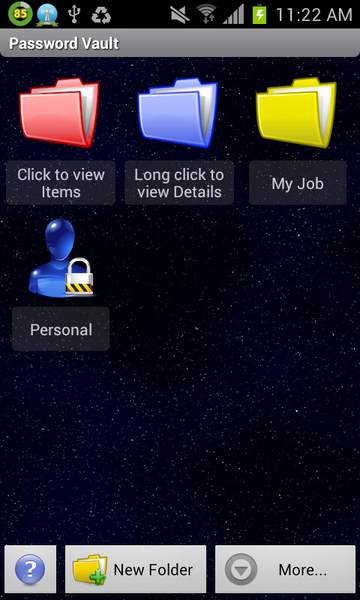
SSE consists of three modules: Password Vault, Message Encryptor, and File/Dir Encryptor. The Password Vault module allows you to safely store passwords and organize them into folders. In addition to that, you can pick a distinctive icon for each folder and assign color labels to items in the folders. The module also features a handy password generator which can help you to create strong passwords with a minimum of fuss. The app sports an export feature that can be used to save the entire password vault as a .pwv file. You can then import the file back into SSE using the import function. This way, you can back up your password vault and transfer it between multiple devices.
The Message Encryptor module can be useful for encrypting text notes. You can paste the existing text from the clipboard, encrypt it, and copy it back to the clipboard. Alternatively, you can save the note in the built-in database for later use.
Finally, the File/Dir Encryptor module can come in handy for encrypting files and folders. Encrypting and decrypting files and folders couldn't be easier: pick the desired file or folder in the built-in file browser and press the Encrypt/Decrypt button. Use the same procedure to decrypt an encrypted file or folder.
All of this makes SSE a must-have tool for security-conscious Android users. The app is released under an open source license, and you can install it from Google Play Store free of charge. In other words, you have no excuses for not giving SSE a try.
comments powered by DisqusSubscribe to our Linux Newsletters
Find Linux and Open Source Jobs
Subscribe to our ADMIN Newsletters
Digital Autonomy
• How the Fediverse Found Parts for Its Platforms
• The Answer Was Already on the Shelf
• Changing the Chip Industry: How Public Investment Has Grown Open Silicon
• United Nations Open Source Portal Goes Live
• EU Open Source Strategy Plays Key Role in Tech Sovereignty Package
• France Says “Au Revoir” to Microsoft
Support Our Work
Linux Magazine content is made possible with support from readers like you. Please consider contributing when you’ve found an article to be beneficial.

News
-
Is Linus Torvalds Vibe Coding?
The creator of Linux has added AI into his process for Linux kernel development, and it's more than just for debugging.
-
openKylin 3.0 Released with Expanded AI Integration
The latest release features a pre-installed AI agent to help perform tasks.
-
DigitalOcean Ends Open Source Credits Program
In a change that has surprised many open source developers, DigitalOcean has decided to sunset its Open Source Credits Program.
-
Office 365 Available for Testing on Linux via Bottles
Linux users can now test the official Office 365, thanks to Mirko Brombin's work on Bottles.
-
Dutch Government Turns to Open Source for Digital Sovereignty
Following in the footsteps of other European countries, the Netherlands is looking to increase its sovereign digital infrastructure with open source software.
-
Linux May Soon Work on Snapdragon X2-Based PCs
If you're thinking about buying a Snapdragon X2-based desktop or laptop, Linux may soon be an option.
-
KDE for People Initiative Calls for AI Ban in Plasma
A new community of KDE wants the project to adopt a strict no-AI policy for KDE Plasma.
-
KDE Sets Ambitious Goals for 2026 and Beyond
KDE Connect reveals the goals for the Linux desktop darling, with one of those goals long overdue.
-
It’s Time to Test Fedora 45 Beta
Fedora 45 beta has been released with updated Gnome, KDE Plasma, and kernel.
-
Ubuntu Stonking Stingray Gets Even Rustier
Ubuntu 26.10 has completed its migration to the Rust-based coreutils.