


Secrets of a botnet developer

Web Workers

Botnets aren't all bad. We'll show you how to harness the power of the botnet architecture to solve real-world problems in a business context.
A few years ago, I developed a commercial botnet, also known as a sniper. This sniper botnet automatically purchased vehicles from a website. It also arranged for payment and scheduled shipping to my client, a very reputable automotive dealership. Although the first live test was unsuccessful, I quickly found the problem and composed an email to indicate that we were ready to try again. The email read something like this…
Dear Client, The snipers are in place and they're going to fire at cars today, starting at noon. Hopefully they'll hit something today …!
Just before I sent the message, I recalled talk of government interception and screening of email [1] [2]. I wisely reworded the message with less inflammatory language. Such is my life as a botnet developer.
Colorful language is just one of the obstacles botnet developers face, but beyond their bad reputation and unfortunate name, commercial botnets create true opportunities for business people and developers. In this article, I describe my automobile purchasing project, explore the importance of commercial botnets, and detail how open source tools, including Linux, are important in the world of botnet development and hosting.
Bad Reputation
Please don't paint the wrong picture of me when I say that I am a botnet developer. I am, in fact, an upstanding and well-published member of the IT community, with a background in security. I am also someone who develops software that delivers demonstrable value to clients. The primary way I generate that value is by automating online tasks. Examples of tasks I automate include verifying online prices, checking websites for accuracy, verifying identities, or procuring items for resale. I've even done work for a foreign government. Over 15 years and numerous projects, I have found the best way to automate online tasks is by distributing the load with a botnet.
No matter how well my botnets are received, I constantly battle the bad reputation of other people's botnets. When most people hear the word "botnet," they visualize stealthy viruses and spyware executing on compromised computers. Most of this reputation is well deserved. For example, according to a Microsoft security report published earlier this year [3], a single botnet, Conficker, infected an estimated 7 million computers worldwide. File-sharing websites were the primary carrier for the infection. The symptoms included disabled security services. The prognosis for infected computers wasn't good. If left untreated, the Conficker virus could eventually take full control of the infected computer, making it a zombie slave to a master server somewhere in the cloud. Once infected, the computers could be used for a variety of nefarious purposes, such as launching DDoS (Distributed Denial of Service) attacks or committing identity fraud.
Although the intent and distribution methods are different, the Conficker botnet shares many similarities to the "White Hat" botnets I write for commercial purposes, but the distinction is important. Not every botnet is something that should be removed by anti-virus software. In reality, a small percentage of botnets are actually quite legitimate and useful, especially to a business that is looking for a competitive advantage.
The Sniper Botnet
Although I have developed many commercial botnets, the sniper project is a particularly nice example. Unlike the nasty Conficker, this bot had no ill intent, and it was possibly the only way to solve a real business problem. Now, for the first time, I've been granted permission to talk about the project.
One day, an automotive client called with a problem. He explained that auto dealers used a special secured website to purchase returned rental vehicles (or for readers in the UK, retired cars for hire). These cars were high-value vehicles for automotive dealerships because they had low mileage and were late-model versions of a popular brand. Every automotive dealership in The United States wanted vehicles like these in their resale inventory, and everyday, several hundred of these vehicles were added to the website. Of those offered for sale, about a half-a-dozen vehicles always piqued the interest of nearly every automotive dealership in the country. These vehicles were particularly popular because they had special equipment, were discounted, or were a favorite model.
My client's problem was that, although he could view the cars for sale on the website, he wasn't able to purchase vehicles until a specific time, and when that time arrived, the servers got so much traffic from competing dealerships that it was difficult to even make a bid, let alone purchase anything. My client had discovered a great source for desirable used cars but was unable to purchase any of them. He had a business problem in need of a solution and asked for my help. I suspected that a custom botnet could solve his problem.
How Commercial Botnets Work
Botnets like the auto sniper share three common parts:
- A central server.
- A number of client machines (which I refer to as harvesters).
- A web portal for administering the botnet.
Figure 1 shows how these elements are interrelated.
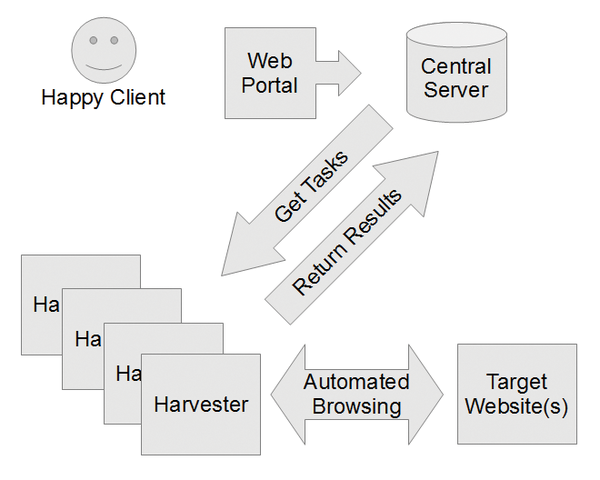 Figure 1: Anatomy of a commercial botnet.
Buy this article as PDF
(incl. VAT)
Buy Linux Magazine
Subscribe to our Linux Newsletters
Find Linux and Open Source Jobs
Subscribe to our ADMIN Newsletters
Digital Autonomy
• How the Fediverse Found Parts for Its Platforms
• The Answer Was Already on the Shelf
• Changing the Chip Industry: How Public Investment Has Grown Open Silicon
• United Nations Open Source Portal Goes Live
• EU Open Source Strategy Plays Key Role in Tech Sovereignty Package
• France Says “Au Revoir” to Microsoft
Support Our Work
Linux Magazine content is made possible with support from readers like you. Please consider contributing when you’ve found an article to be beneficial.

News
-
Is Linus Torvalds Vibe Coding?
The creator of Linux has added AI into his process for Linux kernel development, and it's more than just for debugging.
-
openKylin 3.0 Released with Expanded AI Integration
The latest release features a pre-installed AI agent to help perform tasks.
-
DigitalOcean Ends Open Source Credits Program
In a change that has surprised many open source developers, DigitalOcean has decided to sunset its Open Source Credits Program.
-
Office 365 Available for Testing on Linux via Bottles
Linux users can now test the official Office 365, thanks to Mirko Brombin's work on Bottles.
-
Dutch Government Turns to Open Source for Digital Sovereignty
Following in the footsteps of other European countries, the Netherlands is looking to increase its sovereign digital infrastructure with open source software.
-
Linux May Soon Work on Snapdragon X2-Based PCs
If you're thinking about buying a Snapdragon X2-based desktop or laptop, Linux may soon be an option.
-
KDE for People Initiative Calls for AI Ban in Plasma
A new community of KDE wants the project to adopt a strict no-AI policy for KDE Plasma.
-
KDE Sets Ambitious Goals for 2026 and Beyond
KDE Connect reveals the goals for the Linux desktop darling, with one of those goals long overdue.
-
It’s Time to Test Fedora 45 Beta
Fedora 45 beta has been released with updated Gnome, KDE Plasma, and kernel.
-
Ubuntu Stonking Stingray Gets Even Rustier
Ubuntu 26.10 has completed its migration to the Rust-based coreutils.