


Solving the River Crossing Puzzle with Go

Programming Snapshot – Go Game States
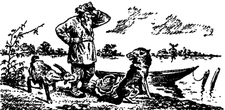
© Lead Image by am not, CC BY-SA 3.0, https://commons.wikimedia.org/w/index.php?curid=18656684
How does a ferryman transport a wolf, a goat, and a cabbage across a river in a boat that can only carry the ferryman plus one item at a time, without the wolf eating the goat or the goat eating the cabbage while left together back on shore? Mike programs the solution in Go.
Whether it is a wolf, a goat, and a cabbage, or one of the many variations on this scenario, keeping the participants safe during passage is part of the classic river crossing logic puzzle [1]. Humans find a solution to these brainteasers by trial and error. Computers, on the other hand, determine the solution by exploring trees of interlinked state sequences, eventually arriving at the desired final state by following one of many different available paths [2].
Before crossing the river, the ferryman, the wolf, the goat, and the cabbage are initially on the west bank. The ferryman can only take one of the three candidates into the boat and cross over to the east bank. During the crossing, he has to take care not to leave the wolf and goat alone on the bank, because the wolf would eat the goat. The same applies to the goat and the cabbage, as goats like to eat cabbage.
The riddle seems unsolvable at first. For example, once the ferryman has crossed the river with the goat and returns on an empty run, the only choice he has is between the wolf and the cabbage as the next candidate. However, neither will get along with the goat on the other bank. The trick is that the ferryman can also carry passengers on the return journey, thus ensuring that he never leaves a dangerous combination (goat/cabbage or wolf/goat) unattended.
[...]
Buy this article as PDF
(incl. VAT)
Buy Linux Magazine
Subscribe to our Linux Newsletters
Find Linux and Open Source Jobs
Subscribe to our ADMIN Newsletters
Digital Autonomy
• The Answer Was Already on the Shelf
• Changing the Chip Industry: How Public Investment Has Grown Open Silicon
• United Nations Open Source Portal Goes Live
• EU Open Source Strategy Plays Key Role in Tech Sovereignty Package
• France Says “Au Revoir” to Microsoft
Support Our Work
Linux Magazine content is made possible with support from readers like you. Please consider contributing when you’ve found an article to be beneficial.

News
-
Dutch Government Turns to Open Source for Digital Sovereignty
Following in the footsteps of European countries, the Netherlands is looking to increase its sovereign digital infrastructure with open source software.
-
Linux May Soon Work on Snapdragon X2-Based PCs
If you're thinking about buying a Snapdragon X2-based desktop or laptop, Linux may soon be an option.
-
KDE for People Initiative Calls for AI Ban in Plasma
A new community of KDE wants the project to adopt a strict no-AI policy for KDE Plasma.
-
KDE Sets Ambitious Goals for 2026 and Beyond
KDE Connect reveals the goals for the Linux desktop darling, with one of those goals long overdue.
-
It’s Time to Test Fedora 45 Beta
Fedora 45 beta has been released with updated Gnome, KDE Plasma, and kernel.
-
Ubuntu Stonking Stingray Gets Even Rustier
Ubuntu 26.10 has completed its migration to the Rust-based coreutils.
-
AI Fixes Linux Bottlenecks Using “Hideous” Code
A Linux developer used AI to fix bottlenecks that caused problems when building the kernel. The resulting AI-generated code needed a lot of work.
-
Advanced Video Coding Still Under Patent
Brazilian patent BRPI0109962B1 has expired, which means that DivX and Xvid are no longer problematic for Linux, but it doesn’t mean that video is all of a sudden fully unleashed.
-
2,000 Vulnerabilities per Linux Release
Thanks to AI bug hunters, the Linux kernel is seeing record numbers of vulnerabilities, and it's overwhelming developers.
-
Linux Exempt from California’s Age Verification Law
So long as Linux is distributed under the GPL, MIT, BSD, and Apache licenses, the OS is exempt from being required to verify the age of its users in California.