


Brief Look at CloudFTP

Productivity Sauce
I backed the CloudFTP project on Kickstarter with the pledge that secured me a CloudFTP unit which duly arrived shortly after the funding had been successfully completed. CloudFTP is a bit of a misnomer, as it hasn't much to do with cloud computing per se. In fact, this miniature Linux-powered device is designed to make any USB mass storage device accessible via a wireless connection.
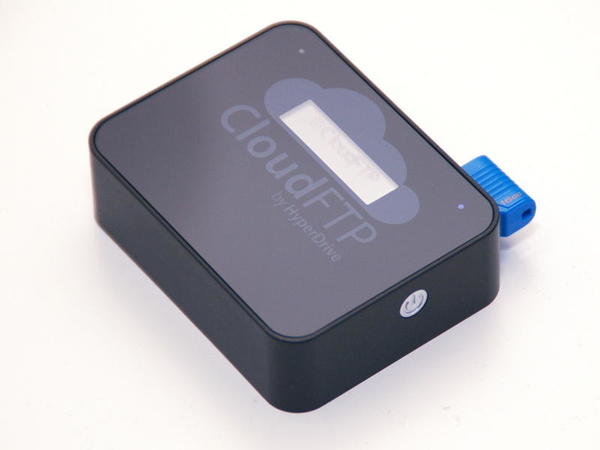
Plug a USB storage device (an external hard disk, USB stick, card reader, etc.), boot CloudFTP, and you can access the files and documents stored on any machine or mobile device via a custom HTML5-based web interface or using an FTP client. CloudFTP packs a 2600 mAh Lithium-Ion battery, so the device can run autonomously for about five hours. A power cable that charges the battery via USB is provided, too. The built-in wireless 802.11b/g/n interface ensures speedy data transfer between the connected storage device and your machine. CloudFTP sports a single USB 2.0 port for connecting USB storage devices, and the device can handle all common file systems, including FAT32, NTFS, HFS, HFS+, EXT2, EXT3, and EXT4.
CloudFTP can operate in the ad-hoc and infrastructure wireless modes. In the default ad-hoc mode, you connect directly to the wireless network created by CloudFTP. Point then the browser to http://cloudftp to access CloudFTP's HTML5-based interface. In theory, the interface should work on any device and browser that supports HTML5, but in reality, CloudFTP's web front is unusable on Android (I tried it with the Android browser and the latest Chrome beta). On the desktop, Chromium was the only browser that could be used with CloudFTP's web interface. The web front lets you browse the contents of the connected storage device as well as view and stream images and music. The Settings section allows you to modify the available options. Here, you can enable the infrastructure mode by connecting CloudFTP to an existing wireless network. When in the infrastructure mode, the CloudFTP's built-in LCD displays the name of the SSID of the network and the device's IP address, which makes it easier to find it on the network.
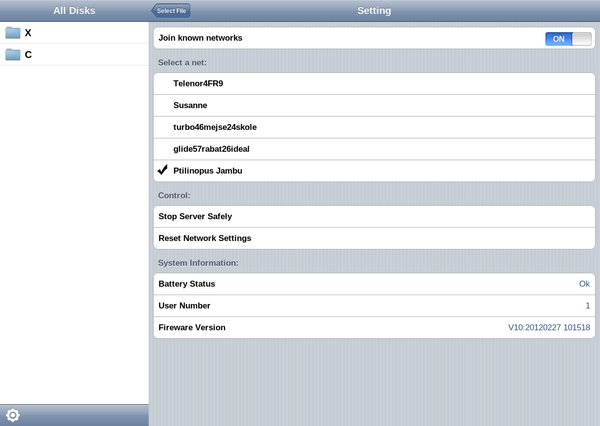
While CloudFTP's web interface is not perfect, you can access the device via the FTP protocol using a regular FTP client using the cloudftp user name and empty password. You can use this as a workaround until the web interface is fixed.
All in all, CloudFTP is a nifty little Linux-based device that can come in handy in certain situations. It won't replace a dedicated file server, but you can use it to share and access files and documents while on the move. As an Android user, you might want to wait till CloudFTP's web interface works properly with Android-based devices, though.
Comments
comments powered by DisqusSubscribe to our Linux Newsletters
Find Linux and Open Source Jobs
Subscribe to our ADMIN Newsletters
Digital Autonomy
• How the Fediverse Found Parts for Its Platforms
• The Answer Was Already on the Shelf
• Changing the Chip Industry: How Public Investment Has Grown Open Silicon
• United Nations Open Source Portal Goes Live
• EU Open Source Strategy Plays Key Role in Tech Sovereignty Package
• France Says “Au Revoir” to Microsoft
Support Our Work
Linux Magazine content is made possible with support from readers like you. Please consider contributing when you’ve found an article to be beneficial.

News
-
Office 365 Available for Testing on Linux via Bottles
Linux users can now test the official Office 365, thanks to Mirko Brombin's work on Bottles.
-
Dutch Government Turns to Open Source for Digital Sovereignty
Following in the footsteps of European countries, the Netherlands is looking to increase its sovereign digital infrastructure with open source software.
-
Linux May Soon Work on Snapdragon X2-Based PCs
If you're thinking about buying a Snapdragon X2-based desktop or laptop, Linux may soon be an option.
-
KDE for People Initiative Calls for AI Ban in Plasma
A new community of KDE wants the project to adopt a strict no-AI policy for KDE Plasma.
-
KDE Sets Ambitious Goals for 2026 and Beyond
KDE Connect reveals the goals for the Linux desktop darling, with one of those goals long overdue.
-
It’s Time to Test Fedora 45 Beta
Fedora 45 beta has been released with updated Gnome, KDE Plasma, and kernel.
-
Ubuntu Stonking Stingray Gets Even Rustier
Ubuntu 26.10 has completed its migration to the Rust-based coreutils.
-
AI Fixes Linux Bottlenecks Using “Hideous” Code
A Linux developer used AI to fix bottlenecks that caused problems when building the kernel. The resulting AI-generated code needed a lot of work.
-
Advanced Video Coding Still Under Patent
Brazilian patent BRPI0109962B1 has expired, which means that DivX and Xvid are no longer problematic for Linux, but it doesn’t mean that video is all of a sudden fully unleashed.
-
2,000 Vulnerabilities per Linux Release
Thanks to AI bug hunters, the Linux kernel is seeing record numbers of vulnerabilities, and it's overwhelming developers.
ftp ?