


Book Review: The Manga Guide to Databases

ROSE Blog: Rikki's Open Source Exchange
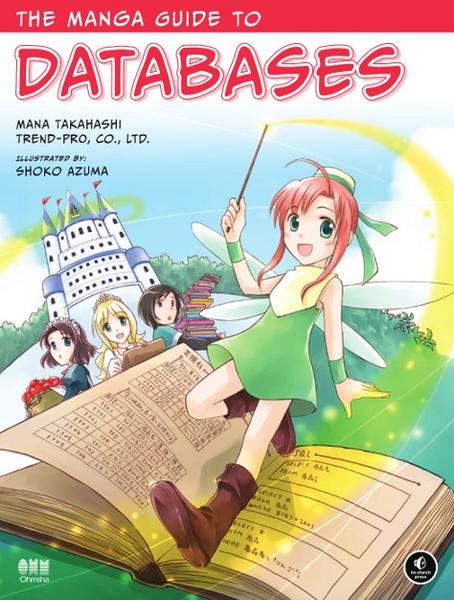
Recently I requested a review copy of The Manga Guide to Databases. Without a doubt, The Manga Guide to Databases was the most enjoyable tech book I've ever read.
Although I'm not a manga expert, my daughter is and she said that the manga quality was excellent. (Well, her exact words were, "I'm impressed. It's pretty good, despite being a boring book." But she's only 12 and can be a bit of a manga-snob, so I took that as a ringing endorsement.)
But what about the content of the book?
I'm happy to say that The Manga Guide to Databases was a quick, easy read on a lazy weekend afternoon. After a brief preface, the book starts readers out with a chapter that explains why we need databases. The manga story revolves around our heroine, Princess Ruruna, who is left in the castle with the task of organizing her country's fruit export business while her father, the king, is gallivanting off to who knows where. A female database admin left holding down the castle? We're off to a good start.
The king sends the princess a package from his journey to a faraway land, and I won't go into too much more detail because the last thing I want to do is ruin a perfectly good action-adventure manga database book. For readers who love a little romance story in their tech books, you'll be pleased with The Manga Guide to Databases. For those of you who'd prefer not to read a love story along with your database design howto, you'll also be happy because the love story is minimal, not too distracting, and won't make you gag.
I'm not a huge fan of reading comics because I think it's a bit tedious, particularly if the font is tiny. However, I'm impressed with how much information is crammed into the 200+ pages of this book, and how easy it is to follow. I'm a visual learner and thought that the book broke concepts down into easy-to-understand chunks of information, such as database terms, types of data models, and data extraction operations. The author, Mana Takahashi, makes clever use of database diagrams (with fruit export examples) to illustrate lessons in each chapter, and concludes chapters with a few test questions to help readers check their understanding of what was covered. She also provides a concise summary of what was covered, followed by answers to the test questions. Takahashi ends the book with a brief list of frequently used SQL statements.
I loved this book and highly recommend it if you'd like a beginner's book with a fun overview of databases, served up manga-style. I can't wait to get my mitts on other upcoming No Starch manga books, including The Manga Guide to Calculus, The Manga Guide to Physics, and The Manga Guide to Molecular Biology. Learning everything should be this easy and enjoyable.
Visit http://nostarch.com/mg_databases.htm to read an excerpt from Chapter 2: What is a Relational Database?
comments powered by DisqusSubscribe to our Linux Newsletters
Find Linux and Open Source Jobs
Subscribe to our ADMIN Newsletters
Digital Autonomy
• How the Fediverse Found Parts for Its Platforms
• The Answer Was Already on the Shelf
• Changing the Chip Industry: How Public Investment Has Grown Open Silicon
• United Nations Open Source Portal Goes Live
• EU Open Source Strategy Plays Key Role in Tech Sovereignty Package
• France Says “Au Revoir” to Microsoft
Support Our Work
Linux Magazine content is made possible with support from readers like you. Please consider contributing when you’ve found an article to be beneficial.

News
-
Epic Games Targets Linux for New Launcher
The Epic Games new launcher is still in preview, but it looks to land on several Linux distributions.
-
Fedora 45 Now Available
The latest iteration of Fedora has arrived with Gnome 51 and KDE Plasma 6.8.
-
Linux 7.4 is "Much Healthier" Thanks to AI
At nearly 42 million lines, Linux 7.4 is the largest merge in the kernel’s history.
-
Working Exploit for a Linux Kernel Flaw Made Public
Even before a bug received its CVE identifier or an upstream fix, the local privilege escalation vulnerability exploit found its way into the wild.
-
r/opensource Bans AI-Assisted and AI-Related Projects
The de facto subreddit for all things open source has not only banned AI-related projects but also users who "don't speak English."
-
Bottlenecks Discovered by Meta Engineers Lead to Scalability Improvements
Thanks to a small group of engineers at Meta, the Linux kernel module kernfs has been improved, which has led to some serious gains.
-
PwnEscape Poses VM Vulnerability
A guest-to-host escape flaw in Linux KVM, named PwnEscape, might be yet another means of attacking Linux.
-
Linux Mint 27 Set for a Christmas Release
The developers behind Linux Mint have announced a Christmas release, and it looks like Santa's sack will be brimming with features.
-
Is Linus Torvalds Vibe Coding?
The creator of Linux has added AI into his process for Linux kernel development, and it's more than just for debugging.
-
openKylin 3.0 Released with Expanded AI Integration
The latest release features a pre-installed AI agent to help perform tasks.