


Versatile Linux with eyes on the enterprise
Server
The server room setting has undergone significant changes in recent years, and openEuler comes with several technologies designed to add efficiency and improve TCO. One example is DPUDirect, a cross-host collaboration framework that allows services to migrate between hosts for better flexibility and failover in a server room environment. DPUDirect responds to the expanding use of Data Processing Units (DPUs). DPUs, which are frequently used in AI and other data-intensive operations, combine features of a CPU and network interface to offload network-intensive tasks, improving performance in settings where complex computations are shared among multiple processors. DPUDirect facilitates offloading of the container or virtualization management plane, eliminating redundancy and improving efficiency in DPU-based environments.
openEuler also supports Enhanced Network File System (eNFS), an advanced version of NFS designed for Network Attached Storage (NAS) environments, as well as HPCRunner, a tuning assistant that reduces deployment costs and improves optimization efficiency.
EulerFS is a file system designed to work efficiently with non-volatile dual in-line memory modules (NVDIMMs). Although other file systems, such as the EXT4 file system, can work with NVDIMMs, heavy metadata management overhead can reduce the overall performance. EulerFS employs pointer-based dual directory views to reduce metadata synchronization overhead.
Cloud
Cloud technology is increasingly important in the IT space. openEuler supports a number of components designed for delivering smoother and more efficient cloud operations. HybridSched is a full-stack solution for hybrid deployment of VMs, providing enhanced OpenStack cluster scheduling and kernel-mode basic resource isolation (Figure 4). Skylark, which is incorporated with HybridSched, is a Quality-of-Service (QoS) aware resource scheduler that improves utilization when high- and low-priority VMs are deployed together.
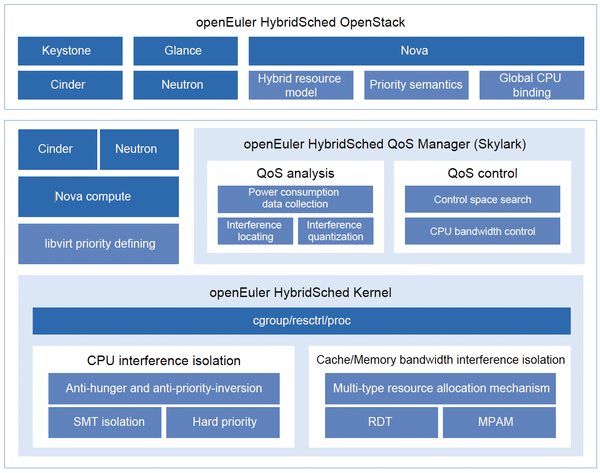 Figure 4: HybridSched supports OpenStack in hybrid environments.
KubeOS is a lightweight operating system that supports containerization in cloud-native scenarios. You can manage your KubeOS environment through Kubernetes, including atomic upgrades and API-based operations for both containers and node OS components. open-Euler also supports Rubik, a hybrid container deployment engine that schedules and isolates resources to improve node resource utilization, ensuring prioritization for mission-critical services. NestOS is a cloud OS incubated in the openEuler community that offers secure management and integrates popular container engines such as Docker, Podman, and iSulad.
openEuler images are currently available directly within the AWS, Azure, and Alibaba cloud systems, and you can install openEuler as a community-provided image in the Google cloud.
Edge
Edge computing is an important topic for many organizations as the old paradigm of centralized processing gives way to exploding data volumes from self-driving cars, industrial sensors, IoT systems, and other smart devices. open-Euler responds to the edge challenge by integrating KubeEdge, an open source management and provisioning tool incubated by the Cloud Native Computing Foundation. openEuler Edge integrates KubeEdge into a unified management platform (Figure 5) that streamlines AI deployments, implements service discovery and traffic forwarding, and improves processing and efficiency for edge devices.
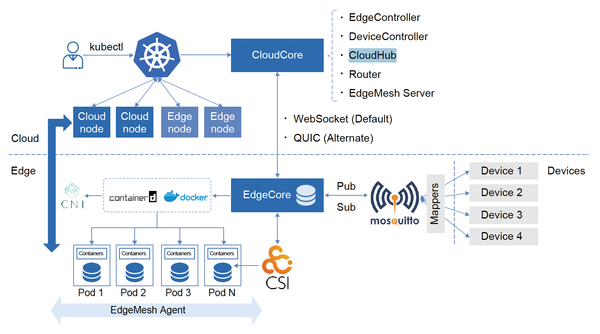 Figure 5: openEuler Edge supports unified management in edge computing scenarios.
« Previous 1 2 3 4 Next »
Buy Linux Magazine
Subscribe to our Linux Newsletters
Find Linux and Open Source Jobs
Subscribe to our ADMIN Newsletters
Digital Autonomy
• How the Fediverse Found Parts for Its Platforms
• The Answer Was Already on the Shelf
• Changing the Chip Industry: How Public Investment Has Grown Open Silicon
• United Nations Open Source Portal Goes Live
• EU Open Source Strategy Plays Key Role in Tech Sovereignty Package
• France Says “Au Revoir” to Microsoft
Support Our Work
Linux Magazine content is made possible with support from readers like you. Please consider contributing when you’ve found an article to be beneficial.

News
-
openKylin 3.0 Released with Expanded AI Integration
The latest release features a pre-installed AI agent to help perform tasks.
-
DigitalOcean Ends Open Source Credits Program
In a change that has surprised many open source developers, DigitalOcean has decided to sunset its Open Source Credits Program.
-
Office 365 Available for Testing on Linux via Bottles
Linux users can now test the official Office 365, thanks to Mirko Brombin's work on Bottles.
-
Dutch Government Turns to Open Source for Digital Sovereignty
Following in the footsteps of other European countries, the Netherlands is looking to increase its sovereign digital infrastructure with open source software.
-
Linux May Soon Work on Snapdragon X2-Based PCs
If you're thinking about buying a Snapdragon X2-based desktop or laptop, Linux may soon be an option.
-
KDE for People Initiative Calls for AI Ban in Plasma
A new community of KDE wants the project to adopt a strict no-AI policy for KDE Plasma.
-
KDE Sets Ambitious Goals for 2026 and Beyond
KDE Connect reveals the goals for the Linux desktop darling, with one of those goals long overdue.
-
It’s Time to Test Fedora 45 Beta
Fedora 45 beta has been released with updated Gnome, KDE Plasma, and kernel.
-
Ubuntu Stonking Stingray Gets Even Rustier
Ubuntu 26.10 has completed its migration to the Rust-based coreutils.
-
AI Fixes Linux Bottlenecks Using “Hideous” Code
A Linux developer used AI to fix bottlenecks that caused problems when building the kernel. The resulting AI-generated code needed a lot of work.