


Features

Easy Wires
Manage your VPNs with WireGuard Easy
WireGuard is a less complex VPN solution compared to OpenVPN and IPsec. WireGuard Easy simplifies the process even further by allowing you to operate a VPN and manage clients through a user-friendly web interface.

Private Viewing
Bring privacy to social media with LibRedirect
The LibRedirect browser extension redirects YouTube, Instagram, Reddit, TikTok, and other services to alternative, privacy-friendly front ends.
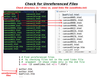
Bash Your Website
Bash tricks for web maintenance
Use tools such as grep and sed to find and fix broken links.

Performance Driven
A customizable, fast Arch Linux-based OS
CachyOS promises lightning-fast speed and optimized performance for experienced users and newcomers alike.
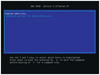
Goodbye Bootloader?
GRUB-free booting
Linux is in constant flux, which naturally affects the boot process. Bootloaders such as GRUB are slowly being replaced with a faster, more secure boot process.

Locking the Gate
Mitigating SSH brute-force threats on Linux systems
SSH brute-force attacks are still a major threat to Linux servers in 2025. Learn how to block them with key-only logins, Fail2ban, iptables, knockd, and more.

Code Inspection
A Python lint tool
Py7 combines seven Python lint tools to deliver a comprehensive check of your Python source code.
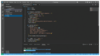
Portable Packages
Building your own AppImages with appimagetool
AppImage packages are highly portable and don't require dependencies. A tool called appimagetool will bundle your Python application into a single AppImage executable.

Traffic Watch
Real-Time Network Monitoring with Iftop
The iftop utility looks simple, but this versatile tool can provide a wealth of network monitoring information.

Ad Assassin
Network-wide DNS filtering with AdGuard Home
Do you need a simple solution to block ads, trackers, phishing, and malware sites on your local network? Configure AdGuard Home as your DNS server for comprehensive network protection.
Subscribe to our Linux Newsletters
Find Linux and Open Source Jobs
Subscribe to our ADMIN Newsletters
Digital Autonomy
• How the Fediverse Found Parts for Its Platforms
• The Answer Was Already on the Shelf
• Changing the Chip Industry: How Public Investment Has Grown Open Silicon
• United Nations Open Source Portal Goes Live
• EU Open Source Strategy Plays Key Role in Tech Sovereignty Package
• France Says “Au Revoir” to Microsoft
Support Our Work
Linux Magazine content is made possible with support from readers like you. Please consider contributing when you’ve found an article to be beneficial.

News
-
System76 Announces the New Thelio Prime Desktop
The makers of the Thelio desktop line and Pop!_OS have released a powerful small form factor PC.
-
A Must See KDE Documentary
It doesn't matter what desktop environment you prefer, this KDE documentary should top your list of things to watch.
-
New KORA Linux Distro to Harness the Power of Local AI
The development team behind CyanogenMod, Android, and Playtron unveils KORA, a Linux distribution built specifically for AI nerds.
-
Epic Games Targets Linux for New Launcher
The Epic Games new launcher is still in preview, but it looks to land on several Linux distributions.
-
Fedora 45 Now Available
The latest iteration of Fedora has arrived with Gnome 51 and KDE Plasma 6.8.
-
Linux 7.4 is "Much Healthier" Thanks to AI
At nearly 42 million lines, Linux 7.4 is the largest merge in the kernel’s history.
-
Working Exploit for a Linux Kernel Flaw Made Public
Even before a bug received its CVE identifier or an upstream fix, the local privilege escalation vulnerability exploit found its way into the wild.
-
r/opensource Bans AI-Assisted and AI-Related Projects
The de facto subreddit for all things open source has not only banned AI-related projects but also users who "don't speak English."
-
Bottlenecks Discovered by Meta Engineers Lead to Scalability Improvements
Thanks to a small group of engineers at Meta, the Linux kernel module kernfs has been improved, which has led to some serious gains.
-
PwnEscape Poses VM Vulnerability
A guest-to-host escape flaw in Linux KVM, named PwnEscape, might be yet another means of attacking Linux.