


CeBIT 2010: RaidSonic Shows Icy Boxes

The NAS 5220 and its brothers NAS 6210 and 6220 provide Linux-based network-attached storage into the home for under $275.
The difference between the 52xx and 62xx models is that users of the latter models can rely on an online service for access anywhere in memory, such as for transferring vacation photos to their homes. In the NAS 6210 and 6220, that are different only in their number of hard drives, and the removable drive modules are also lockable. Both have one USB port in the front and two in the back, along with an Ethernet port.
The NAS 5220, at about $217, is going through its final quality checks before being shipped, although the RaidSonic spokesperson revealed no fixed release date to Linux Magazine Online. The model, according to RaidSonic, is mainly for savvy users, while the 62xx twins are more "plug-and-play." The 5220 access is only via FTP in a bit more complicated way. The hard drives are not removable, but are easily accessible from underneath.
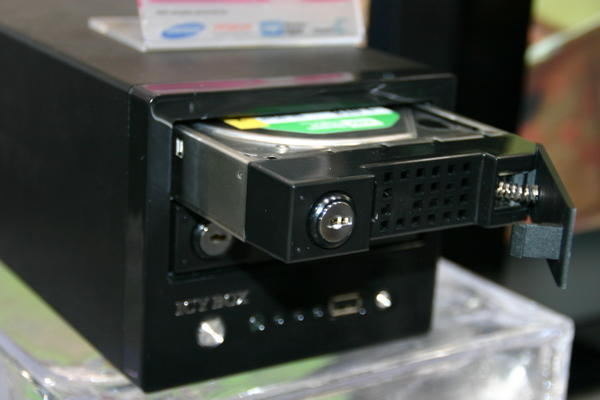
The NAS 6210, which without a hard drive should cost around US$230, also provides what should be an already workable eSATA port. The 6220, which should appear end of April at an undisclosed price, works over hardware RAID for its two 3.5" drive modules. A change from its previous model is the Marvell chipset. In contrast, some compromises were made to the board design and operating system for the 5220.
All devices run Linux (an extended Reddoxx in some version). Inquiry into source code availability proved unsuccessful.
Subscribe to our Linux Newsletters
Find Linux and Open Source Jobs
Subscribe to our ADMIN Newsletters
Digital Autonomy
• How the Fediverse Found Parts for Its Platforms
• The Answer Was Already on the Shelf
• Changing the Chip Industry: How Public Investment Has Grown Open Silicon
• United Nations Open Source Portal Goes Live
• EU Open Source Strategy Plays Key Role in Tech Sovereignty Package
• France Says “Au Revoir” to Microsoft
Support Our Work
Linux Magazine content is made possible with support from readers like you. Please consider contributing when you’ve found an article to be beneficial.

News
-
PwnEscape Poses VM Vulnerability
A guest-to-host escape flaw in Linux KVM, named PwnEscape, might be yet another means of attacking Linux.
-
Linux Mint 27 Set for a Christmas Release
The developers behind Linux Mint have announced a Christmas release, and it looks like Santa's sack will be brimming with features.
-
Is Linus Torvalds Vibe Coding?
The creator of Linux has added AI into his process for Linux kernel development, and it's more than just for debugging.
-
openKylin 3.0 Released with Expanded AI Integration
The latest release features a pre-installed AI agent to help perform tasks.
-
DigitalOcean Ends Open Source Credits Program
In a change that has surprised many open source developers, DigitalOcean has decided to sunset its Open Source Credits Program.
-
Office 365 Available for Testing on Linux via Bottles
Linux users can now test the official Office 365, thanks to Mirko Brombin's work on Bottles.
-
Dutch Government Turns to Open Source for Digital Sovereignty
Following in the footsteps of other European countries, the Netherlands is looking to increase its sovereign digital infrastructure with open source software.
-
Linux May Soon Work on Snapdragon X2-Based PCs
If you're thinking about buying a Snapdragon X2-based desktop or laptop, Linux may soon be an option.
-
KDE for People Initiative Calls for AI Ban in Plasma
A new community of KDE wants the project to adopt a strict no-AI policy for KDE Plasma.
-
KDE Sets Ambitious Goals for 2026 and Beyond
KDE Connect reveals the goals for the Linux desktop darling, with one of those goals long overdue.