


Build Your Own Portable Linux Distro with Porteus

Productivity Sauce
Building a customized Linux distribution can be a daunting proposition -- unless you use Porteus Wizard. This clever and simple service lets you create a custom Live CD distro that fits a USB stick and loads in RAM. The best part is that you don't need any particular Linux skills to build your own distro. The wizard allows you to select and configure a handful of options, and the entire process takes only a few minutes.
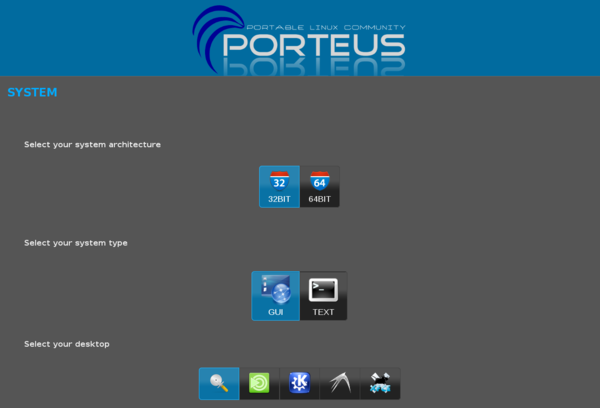
Pick the desired architecture, desktop environment, and applications as well as configure basic settings such as timezone and keyboard. Once you've done that, hit the Build button, and your freshly-baked Linux distro should be ready for download almost instantaneously. The resulting distro is based on Porteus, a Slackware-based distribution optimized to run from removable storage devices. To install the created distro onto a USB stick, use the dd tool to write the content of the ISO image to the stick. Switch then to the /boot directory on the USB stick and run the Porteus-installer-for-Linux.com script to finish the installation. Similar to other Live CD distros, your very own version of Porteus supports a wide range of cheatcodes stored in the /boot/docs directory. The cheatcodes are also available for your perusal on the dedicated Cheatcodes page.
comments powered by DisqusSubscribe to our Linux Newsletters
Find Linux and Open Source Jobs
Subscribe to our ADMIN Newsletters
Digital Autonomy
• How the Fediverse Found Parts for Its Platforms
• The Answer Was Already on the Shelf
• Changing the Chip Industry: How Public Investment Has Grown Open Silicon
• United Nations Open Source Portal Goes Live
• EU Open Source Strategy Plays Key Role in Tech Sovereignty Package
• France Says “Au Revoir” to Microsoft
Support Our Work
Linux Magazine content is made possible with support from readers like you. Please consider contributing when you’ve found an article to be beneficial.

News
-
PwnEscape Poses VM Vulnerability
A guest-to-host escape flaw in Linux KVM, named PwnEscape, might be yet another means of attacking Linux.
-
Linux Mint 27 Set for a Christmas Release
The developers behind Linux Mint have announced a Christmas release, and it looks like Santa's sack will be brimming with features.
-
Is Linus Torvalds Vibe Coding?
The creator of Linux has added AI into his process for Linux kernel development, and it's more than just for debugging.
-
openKylin 3.0 Released with Expanded AI Integration
The latest release features a pre-installed AI agent to help perform tasks.
-
DigitalOcean Ends Open Source Credits Program
In a change that has surprised many open source developers, DigitalOcean has decided to sunset its Open Source Credits Program.
-
Office 365 Available for Testing on Linux via Bottles
Linux users can now test the official Office 365, thanks to Mirko Brombin's work on Bottles.
-
Dutch Government Turns to Open Source for Digital Sovereignty
Following in the footsteps of other European countries, the Netherlands is looking to increase its sovereign digital infrastructure with open source software.
-
Linux May Soon Work on Snapdragon X2-Based PCs
If you're thinking about buying a Snapdragon X2-based desktop or laptop, Linux may soon be an option.
-
KDE for People Initiative Calls for AI Ban in Plasma
A new community of KDE wants the project to adopt a strict no-AI policy for KDE Plasma.
-
KDE Sets Ambitious Goals for 2026 and Beyond
KDE Connect reveals the goals for the Linux desktop darling, with one of those goals long overdue.