


MeeGo 1.0 Software Platform for Netbooks Released

Platform supports Intel-based netbooks, Nokia N900
The MeeGo project, a joint Linux-based venture between Nokia and Intel, announced the release of MeeGo 1.0 core software platform for netbooks. The project, which combines Intel's Moblin project and Nokia's Maemo initiative, released its 1.0 API last week.
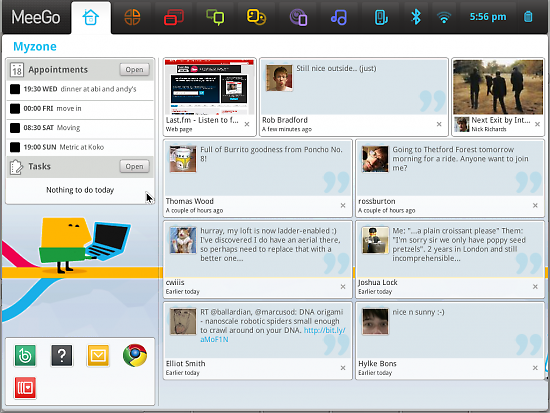
In addition to the API and Qt 4.6, the MeeGo software platform also includes a robust SDK with some pretty powerful open source tools. Ofono telephony, Conman connection manger and BlueZ, the official Linux Bluetooth protocol stack handle communications.
DeviceKit and udev manage the OS's interactions with hardware devices. While the default filesystem is BTRFS. The entire MeeGo 1.0 OS is based on the 2.6.33 build of the Linux kernel.
MeeGo 1.0 also works on Nokia's N900 smartphone, but added handset support will come with the June release of the MeeGo Handset user experience.
The OS comes packaged with Chrome as the default browser, but Chromium is also available. The MeeGo Handset user experience will come packaged with Fennec, the mobile version of Firefox.
The development tree for 1.1 is already open with touch support for handsets, tablets and car-mounted infotainment devices such as GPS confirmed. MeeGo 1.1 will be released in October, but developers will have access in June. Future releases of MeeGo are planned on a six-month schedule.
For more information including links to botht he netbook and N900 versions of the OS, head to the MeeGo community blog.
Subscribe to our Linux Newsletters
Find Linux and Open Source Jobs
Subscribe to our ADMIN Newsletters
Digital Autonomy
• How the Fediverse Found Parts for Its Platforms
• The Answer Was Already on the Shelf
• Changing the Chip Industry: How Public Investment Has Grown Open Silicon
• United Nations Open Source Portal Goes Live
• EU Open Source Strategy Plays Key Role in Tech Sovereignty Package
• France Says “Au Revoir” to Microsoft
Support Our Work
Linux Magazine content is made possible with support from readers like you. Please consider contributing when you’ve found an article to be beneficial.

News
-
Bottlenecks Discovered by Meta Engineers Lead to Scalability Improvements
Thanks to a small group of engineers at Meta, the Linux kernel module kernfs has been improved, which has led to some serious gains.
-
PwnEscape Poses VM Vulnerability
A guest-to-host escape flaw in Linux KVM, named PwnEscape, might be yet another means of attacking Linux.
-
Linux Mint 27 Set for a Christmas Release
The developers behind Linux Mint have announced a Christmas release, and it looks like Santa's sack will be brimming with features.
-
Is Linus Torvalds Vibe Coding?
The creator of Linux has added AI into his process for Linux kernel development, and it's more than just for debugging.
-
openKylin 3.0 Released with Expanded AI Integration
The latest release features a pre-installed AI agent to help perform tasks.
-
DigitalOcean Ends Open Source Credits Program
In a change that has surprised many open source developers, DigitalOcean has decided to sunset its Open Source Credits Program.
-
Office 365 Available for Testing on Linux via Bottles
Linux users can now test the official Office 365, thanks to Mirko Brombin's work on Bottles.
-
Dutch Government Turns to Open Source for Digital Sovereignty
Following in the footsteps of other European countries, the Netherlands is looking to increase its sovereign digital infrastructure with open source software.
-
Linux May Soon Work on Snapdragon X2-Based PCs
If you're thinking about buying a Snapdragon X2-based desktop or laptop, Linux may soon be an option.
-
KDE for People Initiative Calls for AI Ban in Plasma
A new community of KDE wants the project to adopt a strict no-AI policy for KDE Plasma.